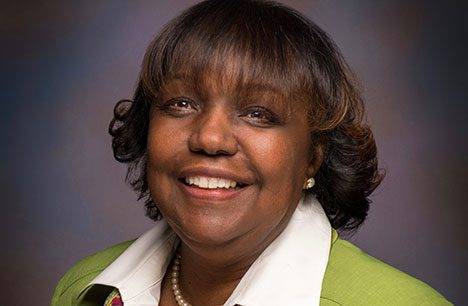
Jamecca Marshall, Jamecca Marshall, MA MPP, is a non-profit executive who has led programs and policy organizations, including the LA STEM Collective, the Los Angeles Urban League, and the Advancement Project’s Urban Peace Institute
By: Jamecca Marshall, Guest Columnist
The recent announcement of layoffs across the Los Angeles Unified School District has reignited anxiety among families, educators, and advocates. Budget uncertainty, concerns about a potential teacher strike, and political tension between Superintendent Alberto M. Carvalho and federal officials have created an atmosphere of instability. For communities that have fought for decades to secure racial and resource equity in public education, these developments are unsettling. But this is precisely the moment when advocates must remain focused, not retreat.
Progress Is Real — and Hard-Won
In the years following the COVID-19 pandemic, student outcomes in Los Angeles mirrored national trends: steep declines in math and reading performance, widening achievement gaps, and fears of long-term academic disruption. Yet recent data show that Black students in LAUSD are rebounding. Math and reading scores have increased from pandemic-era lows, and the four-year graduation rate for Black students has climbed steadily. These gains are not accidental. They reflect sustained investment in targeted supports, expanded learning time, culturally responsive teaching practices, and accountability measures driven by years of advocacy.
When equity-centered policies are implemented with intention, results follow. One of the clearest indicators of forward momentum is the rise in A–G completion rates among Black students. A–G courses are required for admission to the California State University and University of California systems, the primary gateways to economic mobility for many California students.
In 2021, LAUSD reported that just 40% of Black students in LAUSD completed the A–G sequence. By 2024, that number had risen to 50.6%. A more than 10-percentage-point increase in three years represents thousands of young people who are now eligible to apply to four-year universities. For those students, post-high school options, earnings potential, and long-term opportunities have expanded. That is what equity work looks like in practice.
The Black Student Achievement Plan: Advocacy in Action
Another example of sustained advocacy producing results is the expansion of LAUSD’s Black Student Achievement Plan (BSAP). Despite opposition — including a complaint filed by the conservative organization Parents Defending Education — the LAUSD School Board voted to add an additional $50 million to BSAP in the 2025–26 district budget. This decision did not happen in a vacuum. It reflects years of organizing by students, educators, BSAP administrators, Black parent advocates such as Cedric Nelms, formerly of the Black Parents Network, and community-based organizations including the Community Coalition, the Los Angeles Urban League, and the Greater Public Schools Now (GPSN).
These leaders saw firsthand how BSAP investments were supporting culturally responsive teaching, academic interventions, mentoring, and family engagement strategies designed to address long-standing inequities affecting Black students. The expansion of BSAP sends a powerful message: even amid political pressure and fiscal strain, equity-focused policies can withstand scrutiny when communities remain engaged and mobilized. This is not a small victory. It is proof that organized advocacy grounded in data, lived experience, and moral clarity can still move systems.
Why This Moment Requires Resolve
It would be easy to interpret layoffs and political tension as signs that equity work should pause. Critics often frame equity initiatives as expendable or divisive, and those arguments tend to gain traction when budgets tighten. But history shows that economic and political uncertainty is precisely when vulnerable students are most at risk of losing ground. Equity is not an add-on to public education. It is a correction of decades of unequal resource distribution, biased discipline practices, and limited access to advanced coursework.
The improvements in graduation rates, test scores, and A–G completion are the result of intentional, targeted investment. Community advocates, parents, students, and educators must continue to emphasize three key truths. First, equity-centered interventions are working. The post-COVID rebound in academic indicators demonstrates that strategic investment in underserved students produces measurable results. Second, targeted support strengthens the entire system. When schools close opportunity gaps for historically underserved students, district performance improves overall. Many of LAUSD’s highest-performing schools also now exceed their pre-pandemic academic benchmarks across multiple student groups. Third, community advocacy still matters. The expansion of BSAP and the state’s Extended Learning Opportunity Program funding demonstrate that organized voices continue to influence policy decisions and district priorities.
Keeping Students at the Center
The broader political environment, including federal scrutiny of district leadership, adds another layer of complexity. But the focus of advocates should remain clear: protecting and expanding educational opportunity for students. Superintendent Alberto Carvalho’s support for increasing BSAP funding despite external criticism reflects leadership that understands the stakes. Sustaining equity gains will require continued courage from district leaders, and continued engagement from families and advocates who attend board meetings, analyze data, provide testimony, and demand transparency. This is not a moment for fragmentation within the equity movement. It is a time for alignment around shared outcomes: literacy proficiency, math achievement, graduation rates, college eligibility, and workforce readiness for students who have historically been denied these opportunities.
The Stakes for Black and Brown Students
For Black students in LAUSD, recent improvements are promising but fragile. A rising four-year graduation rate means more students walking across the stage with diplomas. Higher A–G completion rates mean more students qualify for admission to CSU and UC campuses. Improved academic performance means more students are prepared for rigorous postsecondary study. Each percentage point represents real young people — future teachers, engineers, entrepreneurs, artists, and civic leaders. If equity initiatives were scaled back now, the district risks reversing these gains. The pandemic showed how quickly disparities widen when targeted supports disappear. The current moment demands vigilance to ensure that fiscal pressures do not disproportionately impact schools serving low-income communities.
A Call to Action
Parents, students, educators, and community advocates must remain engaged. That means tracking district budget decisions to ensure cuts do not undermine equity initiatives. It means highlighting success stories alongside challenges. And it means defending data-driven programs that demonstrate measurable impact. The challenges facing LAUSD are serious. Layoffs and budget constraints will require difficult decisions. But uncertainty should not trigger a retreat from equity. It should strengthen the commitment to it. Advocates have helped move the district forward. The data prove it. Now is the time to protect those gains and push further. Because the students whose futures depend on these decisions cannot afford anything less.
Jamecca Marshall, MA MPP, is a non-profit executive who has led programs and policy organizations, including the LA STEM Collective, the Los Angeles Urban League, and the Advancement Project’s Urban Peace Institute. A proud former student of LAUSD, Ms. Marshall holds a Bachelor of Arts from Stanford University and dual Master’s degrees in Public Policy and History from The George Washington University. Marshall is a former National History Center Fellow focused on public policy and social equity.