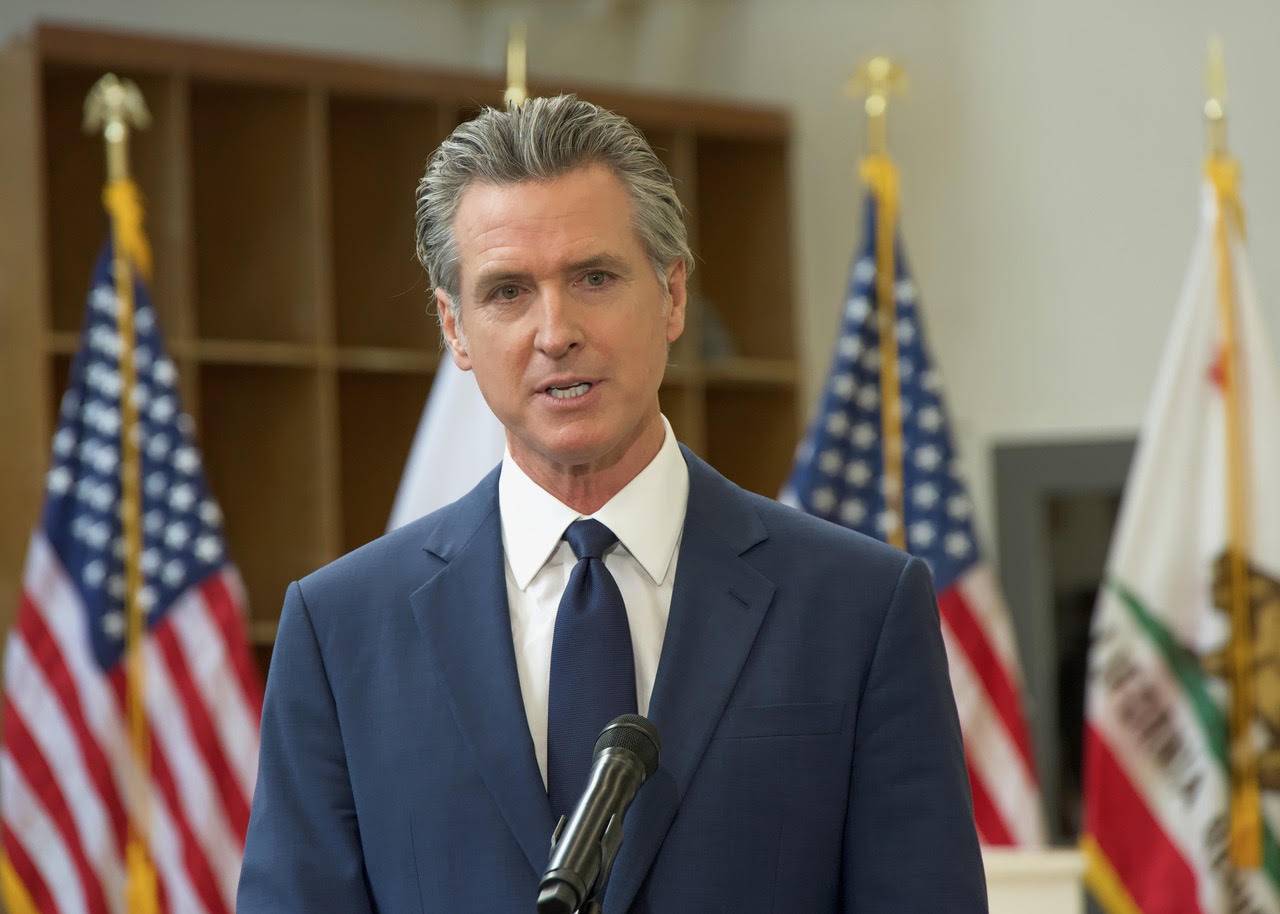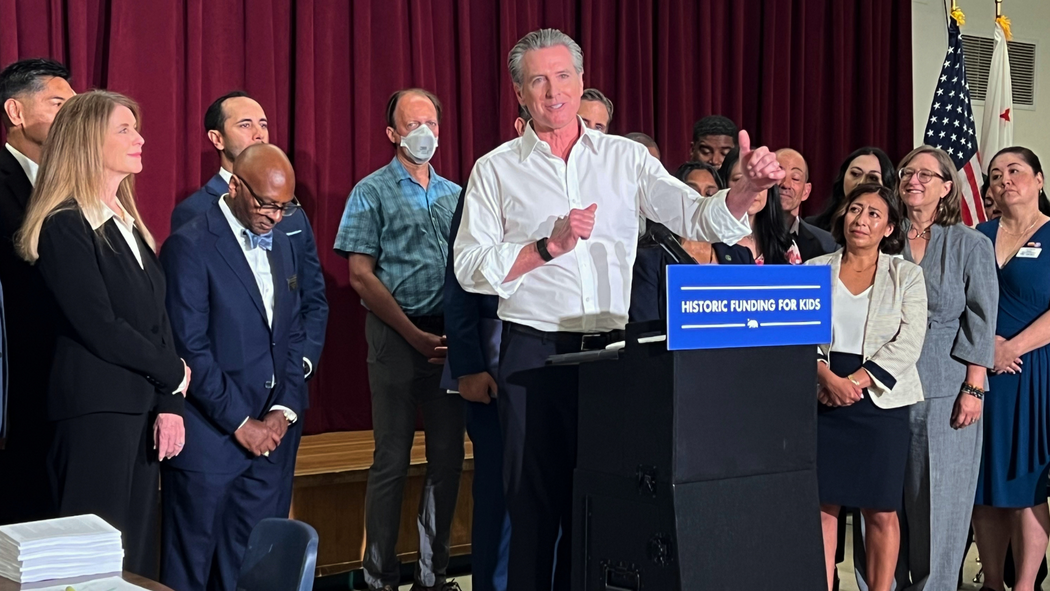
Gov. Gavin Newsom announced the education funding initiative Thursday, days after signing the state’s budget for the upcoming fiscal year.
Gov. Gavin Newsom has signed legislation restructuring California’s public education governance system, marking what supporters describe as the most significant overhaul of the state’s TK-12 leadership structure in more than a century.
Assembly Bill 181, authored by Assemblymembers David Alvarez (D-San Diego) and Darshana Patel (D-Poway), creates an appointed Education Commissioner who will oversee the California Department of Education under the direction of the State Board of Education. The measure is intended to align the state’s policymaking and administrative functions while redefining the role of the elected State Superintendent of Public Instruction.
“California can no longer afford to postpone reforms that have been recommended regularly for a century,” Newsom said after signing the bill. He said the current system has long divided responsibility for setting education policy from implementing it, weakening accountability and slowing improvements for students.
The legislation also expands the superintendent’s role by making the office a voting member of the governing boards overseeing California’s three public higher education systems, while adding two legislative appointees to the State Board of Education and clarifying responsibilities among state education leaders.
The governance overhaul comes alongside what the Newsom administration describes as a historic investment in California’s public schools. On July 10, Newsom announced that the 2026 Budget Act provides $151.4 billion in total funding for TK-12 education — the highest level of school funding in state history.
The budget expands support for Universal Transitional Kindergarten, community schools, literacy and mathematics initiatives, student mental health services, and before- and after-school and summer learning programs, investments the administration says are designed to improve academic achievement and advance educational equity across the state.
“This budget is remarkable in all the ways you’ve heard and some others,” said Linda Darling-Hammond, President, California State Board of Education.
“Just over a decade when the local control funding formula was beginning to be funded California was one of the lowest funded states in the country and one of the lowest performing states in the country,” Darling-Hammond continued. “We were in the bottom 5 on just about everything and we had the fewest teachers per pupil administrators. This budget has the largest investment in education in the last seven years. “Our investments in proposition 98, the education side of the budget, have gone up by about 78%. That’s a 66% increase in per-pupil spending.
The proposal follows months of legislative hearings and builds on recommendations dating back decades. Supporters point to repeated studies, including the Legislature’s 2002 Master Plan for Education, concluding that California’s education governance structure is fragmented, with overlapping authority that hinders effective implementation of state policies.
Alvarez said the reforms are especially important because longstanding governance problems have contributed to persistent achievement gaps affecting Black and Latino students.
“Past leaders failed to act, and our students have paid the price,” Alvarez said, adding that the measure aligns “authority, accountability, and resources” to improve educational outcomes.
The legislation drew support from county superintendents, school administrators, education equity organizations, business officials, and more than 950 organizations statewide, according to the Governor’s Office.
The new governance structure takes effect in January 2027, when California’s next governor and superintendent assume office. State officials will spend the coming months developing transition plans and reporting requirements intended to ensure an orderly implementation.