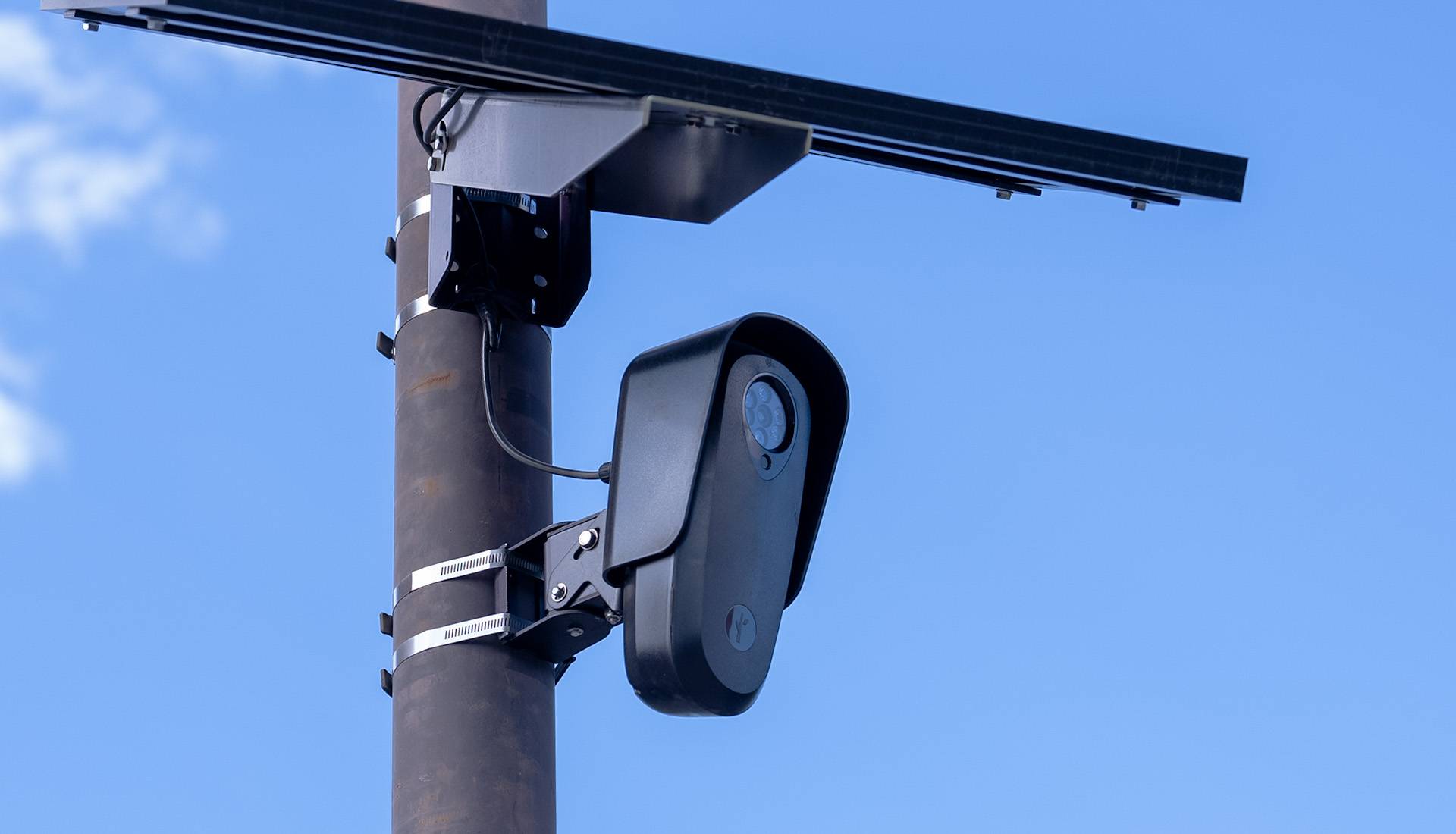
Corona, CA — Corona residents are still left with questions and privacy concerns after an increasing number of Flock automated license plate readers (ALPRs) and drones have been quietly deployed throughout Corona.
Since March 2021, 62 Flock cameras- in which no council vote or required public comment was recorded- have been placed throughout the city. Their stated purpose: to track license plate information and to help first responders respond to emergencies more efficiently. However, an agreement between the City of Corona and Flock Safety has made it unclear to residents where and when the cameras will be placed, how long recorded information will be stored, and who is able to access the information.
Flock Safety, a private and AI-powered surveillance company, has recently been under nationwide scrutiny for its ambiguously stated data collection and sharing practices. Concerns have especially heightened following ICE crackdowns and mass protests, when federal agencies frequently accessed information within the Flock database.
In other instances, law enforcement officials in Texas accessed Flock license plate technology just last year to conduct a nationwide search for a woman who had a self-administered abortion. In April of this year, a Costa Mesa police officer pleaded guilty to using Flock license plate readers to track his wife, mistress, and his mistress’s romantic interests. In both circumstances, surveillance networks were easily accessed with minimal oversight, which has notably concerned U.S. residents.
Public resistance to the technology has remained persistent. California cities like Santa Cruz, Oxnard, and Mountain Viewhave recently terminated their contracts with Flock after learning that the city’s data had been accessed by out-of-state agencies, violating approved policies within each contract.
Deflock Corona, a community coalition, seeks to bring awareness to Corona residents about the City’s contract with Flock Safety. We had the chance to speak more with 15-year Corona resident and IT expert, Brett, who is the founder of this coalition.
Brett recalls beginning the coalition when he first noticed cameras being deployed on the way to his child’s school. His extensive knowledge in tech confirmed to him exactly what they were: Flock Safety ALPRs.
“I know how surveillance technology works, how data gets shared, and what the risks look like when nobody’s asking the hard questions,” Brett said.
Brett’s first city council speech addressing Flock Safety cameras went viral earlier this year, garnering over a million views. He notes that regardless of background or political lean, citizens overall feel uneasy about the technology.
“The common thread is that people feel blindsided,” Brett said. They didn’t know this program existed, they didn’t know how large it had grown, and they didn’t know their data could be accessed by agencies they’ve never heard of. Once they find out, they want to do something about it.”
The coalition’s website, deflock-corona.org, has thoroughly detailed Corona’s silent activity regarding Flock cameras. In the most recent news listed on the website: a $641,000 contract signed in April 2025 that further expanded citywide surveillance through its Drone as First Responder (DFR) program. It also includes a 600-unit video integration license: 62 of these slots are Flock ALPR cameras, and the remaining 539 slots have yet to be publicly explained.
Brett says that the Deflock coalition is still awaiting responses to both public record requests and questions on whether or not the drone contract had been voted on by city council.
In the meantime, Brett has confirmed an upcoming private conversation with Police Chief Robert Newman pertaining to Flock Safety and privacy concerns.
The Deflock coalition continues to maintain its commitment to protecting the privacy of Corona residents. Brett emphasizes that the Deflock coalition’s stance is not anti-police, but anti-mass surveillance. Their overall goal: transparency and accountability from the City of Corona.
“We want an independent audit of the system. Who’s querying it, what data is being retained, and whether the city’s own contract terms are being followed,” he says. “Surveillance technology isn’t going away. But it should require genuine public input, clear data retention limits, enforceable sharing restrictions, and regular public oversight. Right now, none of those things exist here in any meaningful.”
Article by: Julissa Wilson