CDPH: Super Flu Cases on the Rise in California California health officials have confirmed the spread of a mutated influenza strain known as the “super flu,” as flu-related hospitalizations across the state reach their highest level of the season. The California Department of Public Health (CDPH) said Jan.15 that the strain, a mutated form of seasonal influenza A known as H3N2 subclade K, is present in the state. The announcement comes as the department confirmed a second pediatric death linked to the flu since the start of the current respiratory virus season. State data show flu activity has eased slightly from a late-December peak. As of Jan. 3, about 15% of flu tests statewide were positive, down from 17% recorded through Dec. 27. Despite the modest decline, hospitalizations have continued to rise. Flu-related hospital admissions reached a season high of approximately 3.8 per 100,000 people statewide as of Jan. 3, according to CDPH figures. Public health officials continue to emphasize vaccination as the most effective way to reduce the risk of severe illness, even when circulating strains differ from those targeted by the vaccine. “Current seasonal flu vaccines remain effective at reducing severe illness and hospitalization, including the currently circulating viruses,” said Dr. Erica Pan, CDPH director and state public health officer, said in a statement. Pan added that “it is important for families to know that flu vaccines, tests, and treatments remain widely available for all Californians and that it is not too late to get a flu vaccine.” Health officials urge residents to seek medical care if flu symptoms worsen and to take preventive measures as flu season continues across California. Track statewide and regional weekly respiratory virus data
Black Caucus Chair Akilah Weber Pierson Applauds California Ban on Police Officers Wearing Face MasksSen. Akilah Weber Pierson (D-San Diego), chair of the California Legislative Black Caucus (CLBC) last week praised California’s new law limiting when law enforcement officers may wear face coverings, calling it a critical step toward accountability and public trust in policing. The measure, SB 627 -- also known as the No Secret Police Act -- was signed by Gov. Gavin Newsom last year and took effect on Jan. 1. It restricts law enforcement officers from wearing facial coverings while performing public duties, except under limited operational circumstances. The law applies to local, state, and federal agencies operating in California and requires departments to adopt and publicly post mask-use policies by July 1, 2026. Weber Pierson, a co-author of the legislation, said the law affirms the public’s right to transparency. “The public has a right to know who is enforcing the law in our communities,” Weber Pierson posted on Facebook on Jan. 14. Framing the issue as more than administrative oversight, Weber Pierson stated that visibility and accountability are essential to community well-being. “Transparency in policing is a public health issue,” she added, noting that communities cannot heal from historical trauma when officers wield authority anonymously. Despite support from civil rights advocates, the law is facing a federal court challenge. The U.S. Department of Justice is seeking to pause its application to federal agents, arguing that the measure interferes with federal law enforcement operations, particularly immigration enforcement. Federal attorneys told the court on Jan. 14 that the law improperly regulates federal officers and exposes them to increased safety risks. First Assistant U.S. Attorney Bill Essayli said officers are increasingly targeted through facial recognition and AI tools, claiming an “8,000% increase in threats” against Immigration and Customs Enforcement (ICE) agents. He also cited instances of agents being tracked to their homes and harassed. During the hearing, the judge raised concerns about potential unequal treatment if exemptions apply differently to state and federal officers. A decision on the request to pause enforcement is expected soon. Supporters of SB 627 argue the law advances civil rights by ensuring officers are identifiable during public interactions, while opponents contend it endangers officer safety and undermines federal enforcement authority -- setting the stage for a legal battle with broader implications for policing and oversight in California.
Thursday, 22 Jan 2026
Thursday, 22 January 2026

All Bets Are Off for Shutdown’s Impact On Super Bowl

The nation’s most-watched sporting event takes place in less than three weeks — and officials are fearful about travel and security.


By: Dareh Gregorian


When it comes to Super Bowl LIII, air traffic controllers are flying blind.


The government shutdown has already resulted in canceled planning meetings for the Feb. 3 game in Atlanta, and if the federal budget impasse continues, airport screeners and flight controllers at the busiest airport in the world will be working on game day for no pay.


Dan McCabe, a National Air Traffic Controllers Association representative, told NBC News that his colleagues had been holding meetings over the past year to prepare for the surge in travelers to the area. But now the planning meetings, which included officials from his union, the Federal Aviation Administration and the National Football League, have been grounded.


“As soon as the shutdown happened, these meetings stopped happening,” McCabe said. As a result, controllers feel less prepared than they’d like for the anticipated 1,500 additional flights a day to the area during Super Bowl week.

Air traffic controller working without pay: Workers are upset, not sleeping

Jan. 16, 201904:14


“When we work on something as big as the Super Bowl — the biggest spectator event in the country — it takes us a lot of time to plan on extra airplanes and traffic,” McCabe said. “We’re going to keep the event safe, but we want it to be an enjoyable event for everybody. It’s frustrating that I know it won’t be as good as it could be.”


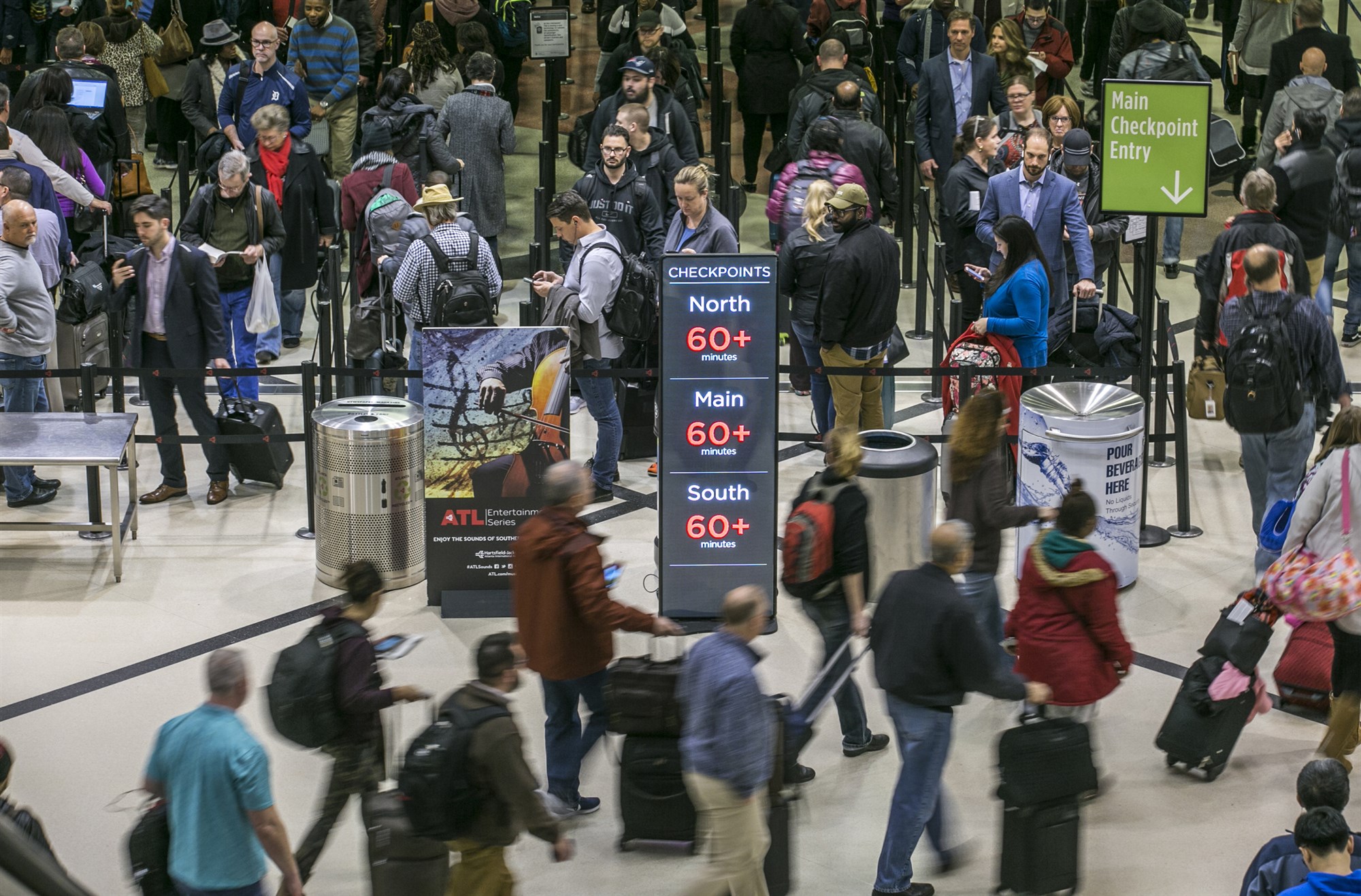
The impact of the shutdown has already been on display at Hartsfield-Jackson Atlanta International Airport. Travelers say they have been forced to wait on security lines for up to three hours because of a shortage of Transportation Security Administration agents, who’ve also been working without pay.


“Obviously, we are in uncharted territory with the shutdown that’s gone on this long, and we are preparing as best we can from our vantage point,” Mayor Keisha Lance Bottoms told reporters on Tuesday.


Typically, 60,000 to 80,000 passengers are screened daily at Hartsfield-Jackson, airport statistics show. While airport traffic is expected to increase for the entire week before the game, about 110,000 passengers are expected to leave through the airport the day after on what Bottoms called “Mass Exodus Monday.”

Strapped security


If the shutdown — now in an unprecedented 27th day — continues, the federal employees charged with overseeing security at the event will also be working without pay.


The Department of Homeland Security is heavily involved with keeping the event safe from terrorism and other threats, working with the NFL, FBI and local law enforcement agencies.


That includes personnel from the Secret Service, Customs and Border Protection, Immigration and Customs Enforcement, and the Federal Emergency Management Agency. All of those agencies have been hit by the shutdown — as has the FBI.


“I’m not sure how they’re going to deal with that,” said Tim Bradley, a security expert at IMG GlobalSecur. “How do they even pay for these agents to travel down there if they don’t have funding?”


DHS spokesman Tyler Houlton did not answer that question when asked by NBC, but said, “The current lapse in government funding will have no no effect on our commitment to assuring a safe and secure event.”


“The Department takes the security of high-risk events like the Super Bowl extremely seriously, and we continue executing our protection responsibility and supporting our local public safety partners for this event,” Houlton said.


Atlanta Police Chief Erika Shields told reporters earlier this week that her department has been planning for the game for two years.


“Our goal is for our officers to be visible, for the public to feel safe, be safe, and be able to position ourselves so that we can react immediately to whatever scenario we are confronted with,” Shields said. “I think that with anything you can go in with a spirit of confidence if you have prepared, and we have prepared well.”


But the shutdown came as a surprise and is taking a toll on the workers preparing for the event, McCabe said.


“Morale is as low as I’ve seen it in 13 years with the FAA,” he said. “It’s absolutely terrible. Everybody in that building looks like they lost their best friend,” he said. “It’s already a stressful enough job.”


The Most Read

CDPH: Super Flu Cases on the Rise in California California health officials have confirmed the spread of a mutated influenza strain known as the “super flu,” as flu-related hospitalizations across the state reach their highest level of the season. The California Department of Public Health (CDPH) said Jan.15 that the strain, a mutated form of seasonal influenza A known as H3N2 subclade K, is present in the state. The announcement comes as the department confirmed a second pediatric death linked to the flu since the start of the current respiratory virus season. State data show flu activity has eased slightly from a late-December peak. As of Jan. 3, about 15% of flu tests statewide were positive, down from 17% recorded through Dec. 27. Despite the modest decline, hospitalizations have continued to rise. Flu-related hospital admissions reached a season high of approximately 3.8 per 100,000 people statewide as of Jan. 3, according to CDPH figures. Public health officials continue to emphasize vaccination as the most effective way to reduce the risk of severe illness, even when circulating strains differ from those targeted by the vaccine. “Current seasonal flu vaccines remain effective at reducing severe illness and hospitalization, including the currently circulating viruses,” said Dr. Erica Pan, CDPH director and state public health officer, said in a statement. Pan added that “it is important for families to know that flu vaccines, tests, and treatments remain widely available for all Californians and that it is not too late to get a flu vaccine.” Health officials urge residents to seek medical care if flu symptoms worsen and to take preventive measures as flu season continues across California. Track statewide and regional weekly respiratory virus data

Black Caucus Chair Akilah Weber Pierson Applauds California Ban on Police Officers Wearing Face MasksSen. Akilah Weber Pierson (D-San Diego), chair of the California Legislative Black Caucus (CLBC) last week praised California’s new law limiting when law enforcement officers may wear face coverings, calling it a critical step toward accountability and public trust in policing. The measure, SB 627 -- also known as the No Secret Police Act -- was signed by Gov. Gavin Newsom last year and took effect on Jan. 1. It restricts law enforcement officers from wearing facial coverings while performing public duties, except under limited operational circumstances. The law applies to local, state, and federal agencies operating in California and requires departments to adopt and publicly post mask-use policies by July 1, 2026. Weber Pierson, a co-author of the legislation, said the law affirms the public’s right to transparency. “The public has a right to know who is enforcing the law in our communities,” Weber Pierson posted on Facebook on Jan. 14. Framing the issue as more than administrative oversight, Weber Pierson stated that visibility and accountability are essential to community well-being. “Transparency in policing is a public health issue,” she added, noting that communities cannot heal from historical trauma when officers wield authority anonymously. Despite support from civil rights advocates, the law is facing a federal court challenge. The U.S. Department of Justice is seeking to pause its application to federal agents, arguing that the measure interferes with federal law enforcement operations, particularly immigration enforcement. Federal attorneys told the court on Jan. 14 that the law improperly regulates federal officers and exposes them to increased safety risks. First Assistant U.S. Attorney Bill Essayli said officers are increasingly targeted through facial recognition and AI tools, claiming an “8,000% increase in threats” against Immigration and Customs Enforcement (ICE) agents. He also cited instances of agents being tracked to their homes and harassed. During the hearing, the judge raised concerns about potential unequal treatment if exemptions apply differently to state and federal officers. A decision on the request to pause enforcement is expected soon. Supporters of SB 627 argue the law advances civil rights by ensuring officers are identifiable during public interactions, while opponents contend it endangers officer safety and undermines federal enforcement authority -- setting the stage for a legal battle with broader implications for policing and oversight in California.

New Ballot Push: Initiative Would End Prop 50 Temporary Congressional Maps After 2026

Victory Community Church Invites Inland Valley Residents to Worship Service in Ontario

Commentary: How CalMatters Turned a Handbag Into a Political Firestorm and Exposed a Journalism Blind Spot