Dear Friend,
San Bernardino, CA — This Saturday, we embark upon our largest gathering yet of African American/Black parents, bringing together Black educators, parents, grandparents, community members, and people who support or serve that same community. The priority is to equip parents to change the trajectory of African American and Black students in the Inland Empire. It’s exciting to think that we’ve come so far, but it’s important to note that we have much further to go.
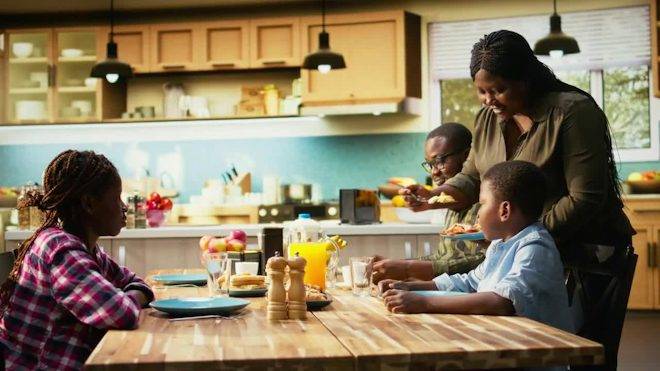
The history of this region reflects the history of our nation. Here in the Inland Empire, that history includes Ku Klux Klan activity from the 1920s into the 1980s, and the 1945 arson that killed O’Day Short, his wife Helen, and their two children after they refused to leave their home in a white section of Fontana. The conversations that took place around kitchen tables in those years still take place today; they just look a little different and are probably less open.
The classroom is a microcosm, a miniature version of society. What plays out in society plays out in our classrooms: who gets to be heard, whose voices matter, who is called out for moving, and whose raised hand is ignored even when that child may have the right answer.
Not a Time for Apologies
Understanding the experience of Black students starts with understanding the experience of their parents. This is not a time for apologies. It is not necessarily a time for brutal honesty, but for transparency. Increased transparency can help reduce the likelihood of repeating the past.
Finding Myself on the Poster Board
Our keynote speaker, Dr. William A. Smith of the University of Utah, will bring a special message about racial battle fatigue, a term he coined. For me, it started during my doctoral studies in 2009, when I found myself in front of a poster board explaining racial battle fatigue and the experience of people who look like me: racialized bodies in a system not designed to treat us with dignity and respect. I found myself on that poster board. It was a moment of self-discovery, and it helped me grow stronger and begin to fight back against the racialized experiences I was having, not just in education, but in the workforce, the grocery store, the bank, and everywhere in life.
Dr. Smith describes racial battle fatigue as a repetitive stress injury caused by systemic racism. Consistent exposure to racial trauma creates injuries, and over time those injuries produce symptoms that mimic post-traumatic stress disorder. Describing it this way gives people the words to communicate what their body is trying to tell them: that it’s too much harm. That matters, because many Black parents have experienced the same trauma their children are going through now.
One Story, Three Generations of Harm
Recently, I heard about a Black student who sat in a meeting with her mother and school administrators, trying to explain why she couldn’t respond to teachers who were trying to help her. They meant well, but sitting in front of her peers, it was difficult for her to find her words. As a therapist, I understand how easily a child can become frozen in her seat. It’s the reptilian brain. Yet the adults in that room were unable to help her find the words.
What had been missed or forgotten was that months earlier, this student stood alone with school staff who told her that her medical and mental health needs were not real and that her accommodations would not be given. She froze, unable to speak for herself, so she called her mom. What could have been mistaken for a pocket dial, her mother answered, and she heard for herself the words being said to her daughter.
The student was triggered and traumatized. Her mother was traumatized as she relived it. And as I heard the story, I myself was triggered, re-traumatized by the education system so many of us have been exposed to. This is racial battle fatigue.
What We’re Up Against
This system is primed. It is old. And it has historic roots in how Black men, women, and children experience life, social settings, and academic settings. In the 2024–25 school year, Black students in California were suspended at a rate of 7.9 percent, nearly three times the statewide rate of 2.9 percent. Dr. Smith’s newest research, published last month, found that Black women from their mid-20s to mid-60s named early schooling as their first lasting exposure to this harm, and that it intensified, rather than faded, with education and professional success.
Owning the Story
Change is possible. Just last year, Fontana Unified School District opened the school that sits on the ground where the Short family lived under a new name: O’Day Short Elementary. Credit belongs to Cyrus Moss, a young student who petitioned the school board for the change; to his mother, who tenaciously brought him to board meetings and anywhere his voice could be heard; and to the school board, which voted unanimously in favor. All of these things matter.
As important as the conversations are at the kitchen table, we need to be having them in the classroom, in the school board meeting, in the conference room, and in therapy offices across the country. The racial harm that yields racial battle fatigue, the injuries Dr. Smith describes, cannot be undone if we don’t begin to own this story.
I look forward to having parents in the space, educators gaining the knowledge, and children too, if you bring them.
Join us this Saturday, October 17, from 8:30 a.m. to 3:00 p.m. at California State University, San Bernardino. Dr. Smith opens the day, followed by breakout sessions, a superintendents’ panel, community conversations, and a closing keynote from Donnell Layne on how artificial intelligence is changing education and the workforce. To register, visit blackparentsummit.org.
Until next time, stay encouraged, remain committed, and be well.
Article By: Dr. April M. Clay, EdD, LMFT, PPS