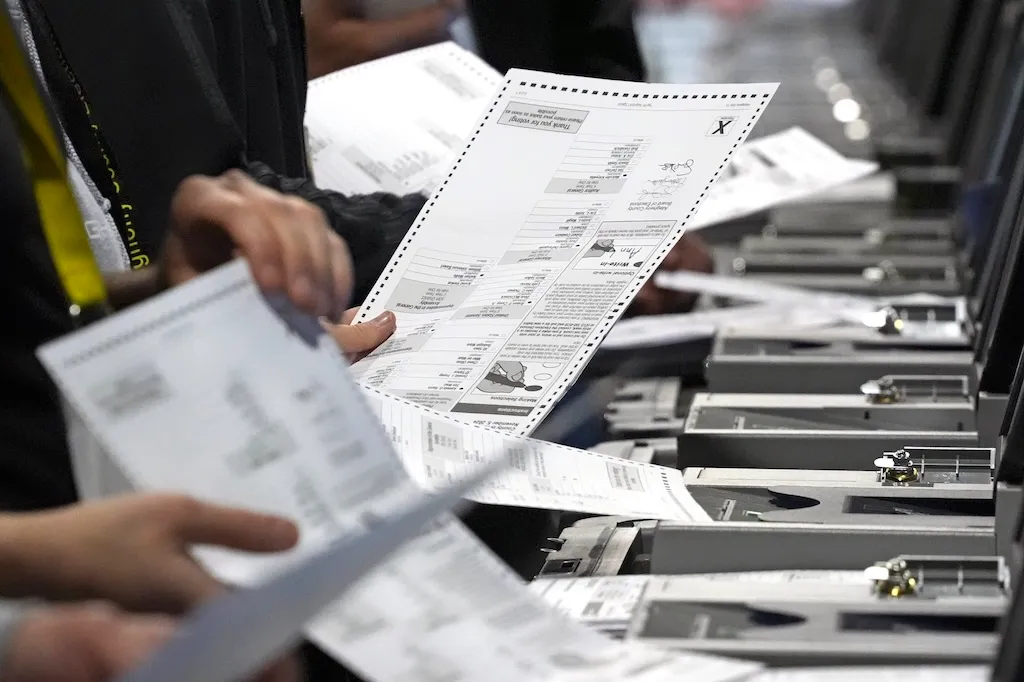
Election Day is approaching, and while much of the attention is focused on the candidates seeking public office, voters will also be asked to make important decisions on propositions that could shape our communities and our state for years to come.
At the Inland Valley News, we believe informed voters are empowered voters. Yet, we also recognize that ballot propositions can be confusing, often written in legal or technical language that makes it difficult to understand exactly what is being proposed and how it may affect our everyday lives.
That’s why we’ve created The Ballot Breakdown, a straightforward, nonpartisan guide designed to help you navigate the propositions appearing on the November 3 ballot.
Our goal is simple: to break down each proposition in plain language, next week we will explain what a YES vote means, what a NO vote means, and provide the context you need to make an informed decision.
We’re not here to tell you how to vote. We’re here to make sure you understand what you’re voting on.
Whether you’re casting your ballot for the first time or have participated in elections for decades, we encourage you to take the time to read, ask questions, and consider how these measures may impact you, your family, and your community.
Your vote is your voice, and understanding your ballot is one of the most powerful ways to use it.
The Ballot, Unpacked
Prop 1 – Bonds for Affordable Housing & Veteran Home Loans
Authorizes $11.25 billion in state general obligation bonds for housing affordability programs, including multifamily rental housing, mortgages for veterans,supportive housing, preservation of existing affordable housing, and downpayment assistance.
Fiscal Impact: Increased state cost of $500 million to $600 million annually for about 25 years to repay the housing bond.
Prop 2 – Increases the State’s Rainy-Day Fund
Increases California’s Rainy-Day Fund, approved by voters in 2014, to provide funding for education, health care, public safety, and other essential services during economic downturns.
Fiscal Impact: State budget reserves would be higher.
Prop 3 – Extends Certain Income Tax Rates
Makes permanent existing voter-approved tax rates for individuals earning over $371,000 (adjusted annually for inflation). Allocates tax revenues to publiceducation.
Fiscal Impact: Maintains $5 billion to $15 billion of annual state income tax revenue by making a temporary tax increase on high-income earnerspermanent instead of letting it expire in 2031.
Prop 4 – End Ban on Public Financing of Campaigns
Repeals prohibition on state and local governments offering public funding of candidate election campaigns. Public funding programs may not use funds earmarked for education, transportation, or public safety.
Fiscal Impact: Ongoing costs to the state of a few hundred thousand dollars each year for the Fair Political Practices Commission to answer questions fromstate and local governments about public campaign finance programs.
Prop 5 – Changes to Recall Elections
Under current law, voters elect replacement candidates at the same time as the recall election. This measure instead fills recall vacancies by subsequent special election or appointment.
Fiscal Impact: Net fiscal effect unknown. In the event of a recall, savings or costs of millions of dollars to administer the election depending on the office recalled.
Prop 37 – Bonds to Help Middle-Income Californians Buy New Homes
Authorizes $25 billion in bonds to offer eligible buyers fixed-rate mortgages for up to 17% of purchase price of a newly constructedhome priced below about $1.5 million. Borrowers must be California residents, occupy the home, meet income limits, and pay at least 3%down. Bonds repaid by mortgage payments, not State.
Fiscal Impact: No direct state or local costs.
Prop 38 – Bonds for Research on the Immune System
Authorizes $8.4 billion in general obligation bonds for immunology and immunotherapy research, half to a single University of California-affiliatednonprofit medical research institute, half to research grants.
Fiscal Impact: Increased state cost of $500 million to $600 million annually for about 20 years to repay the research bond, with some or all the cost offset if the funded research generates revenue.
Prop 38 – Prohibits Citizens from Voting Unless the Present Government-Issued ID
Invalidates mail ballots that do not have last four digits of designated government-issued identification number written on envelope. Prohibits in-person voting without presenting government-issued identification.
Fiscal Impact: Costs of between tens of millions of dollars and low hundreds of millions of dollars each year to implement new voting requirements.
Prop 40 – The Billionaires Tax Act
Imposes 5% tax on certain taxpayers with assets over $1 billion; revenue primarily for health care. Exempts revenues from constitutional requirements forschool funding and spending limit.
Fiscal Impact: Temporary revenue increase of tens of billions of dollars spread over several years from wealth tax on billionaires. Possible ongoing decrease of less than $1 billion per year in income tax revenue from billionaires.
Prop 41 – Spending Limits & Audits for New Special Taxes
Nullifies state taxes enacted after January 1, 2026, that exempt their revenues from voter-approved state spending limit. Requires pre-election andrecurring audits of programs funded by new special taxes.
Fiscal Impact: The net fiscal effect is unknown as it depends on future decisions by voters, the Legislature, and other policymakers.
Prop 42 – Limits New State Tax on Personal Property
Prohibits any new state tax (1) imposed on the ownership of personal property (all things people own other than real estate), or (2) that applies retroactively based on taxpayer’s past activities. Nullifies taxes enacted after January 1, 2026, that conflict with this measure.
Fiscal Impact: Possibility that tax revenues will not go up as much in the future.
Prop 43 – Two-Thirds Vote for Certain Local Taxes
Limits voters’ ability to pass voter-proposed local special taxes by increasing percentage of votes needed to approve such ballot measures from a majority (over 50%) to two-thirds, beginning January 1, 2027.
Fiscal Impact: Possibility that local government tax revenues will not go up as much in the future due to a higher vote threshold for certain taxes.
Prop 44 – 99% Health Care Spending for Non-Profit Safety-Net Clinics
Imposes penalties on nonprofit Federally Qualifed Health Centers (community clinics providing primary care to medically underserved areas and populations) thatspend less than 90% of revenue on “program services” advancing their charitable purpose, including but not limited to patient services.
Fiscal Impact: Increased state costs in the low tens of millions of dollars per year, covered by fees.
Prop 45 – Changes Environmental Review for Certain Projects
Amends California Environmental Quality Act (CEQA) to expedite environmental review for certain projects (including most housing, transportation, water, and health projects) by setting deadlines to complete environmental review and resolve lawsuits challenging project approvals.
Fiscal Impact: Initial costs for state and local governments, likely in the high tens of millions of dollars—potentially exceeding $100 million—annually, partly covered by fees. Uncertain, potentially more significant positive or negative longer-term fiscal effects.