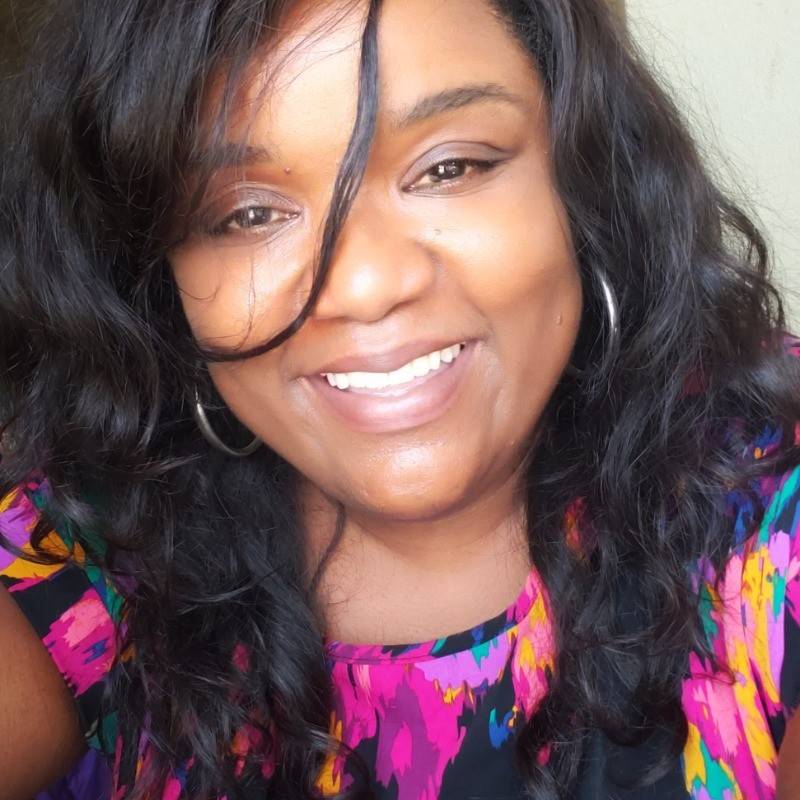

Nikki Helms is a midwife and full-spectrum birthing care advocate.
Midwife and full-spectrum birthing care advocate Nikki Helms has spent nearly two decades supporting families through pregnancy, birth and the often-overlooked postpartum period in California.
A Certified Professional Midwife, lactation educator, and DONA-and CAPPA-trained labor and postpartum doula, Helms is known for her deeply personalized, in-home education, her community-centered workshops, and her unwavering belief that evidence-based care and informed consent are essential to healthy outcomes for parents and babies. As the founder of the San Diego Birth Center, she has helped create a welcoming, home-like alternative to hospital birth — one rooted in continuity of care, trDAt and deep listening.
In this Q&A with California Black Media, Helms reflects on what it would take to truly improve birthing services in the United States, why midwifery must be fully integrated into the healthcare system, and how trauma, safety and community shape birth experiences across a lifetime. Drawing on her clinical expertise and lived experience, Helms shares insights on building supportive birth environments, paying for care, and what every parent and baby deserves for a healthy start.
What is the one thing we could do to improve birthing services in the U.S.?
We need to integrate well-trained, super-experienced, certified professional midwives fully into the healthcare system. Over the last century, the medical community has excluded, and in some states, banned midwifery, which has impacted Black parents and babies the most and limited safe choices. Today, the U.S. spends more money than any other developed nation on maternity care with some of the worst outcomes — for Black families especially. The integration of professional midwives is long overdue.
What does a midwife do?
There are several types. I’m a certified professional midwife and founder of a birth center. But there are also midwives who come to your home, educators, lactation consultants, doulas who provide support and advocacy, and monitrices, who have clinical training and can support the mother before and after the birth.
How are birth centers and midwifery services different from traditional care?
A lot of people feel more at home in a birth center. They are often colorful, inviting, simple, and calm. People also feel more at home because we’ve supported them from six weeks into their pregnancy to six weeks after the birth. That’s nearly a year, so we’ve gotten to know them and understand their lives. This wonderful continuity can help us identify subtle issues later on, especially postpartum. A team of three midwives will always pick up on cues.
As a midwife, what does this work mean to you?
This work just fills my soul. It empties me out completely and fills me. It’s the look on someone’s face after their baby has been born. They are filled with an amazing clarity and a look that says, “I did it.” And I can say, “Yes, you did, and I’m not surprised at all because I believe in you to the depths of my soul.”
After helping so many parents and babies, how has this work changed you?
I often think that peace on earth begins with birth. There are so many things wrong with the world that we can trace back directly to the birth experience. So, if we take care of mothers and babies and create a community around birth, then we are raising children who will know what it means to be emotionally mature, to have boundaries and to feel safe. People who feel safe don’t start wars or get into a lot of trouble.
How do parents pay for midwifery services?
Midwives and birth centers often accept cash, payment plans, credit cards, and certain insurances, like Medi-Cal. I tell expectant parents to, “Put out a shoebox at your baby shower and ask for $20 a head and use that money to pay for your postpartum doula. Help yourself along the way.” People can also create online fundraisers.
If you were to give every parent and baby a healthy birth bag, what would be in it?
- Education, so you know what to expect physiologically and psychologically. Take out some of the surprises. For example, giving birth is generally bloodless, but not vomit-less.
- Support without judgment. That can be a partner, a doula, your mother, a partner’s mother, a best friend, acommunity. And if you have to pay for it, then do, because it’s worth every dime.
- Additional nutrition. We don’t want to take anything away from you, but we want to add the nutrition that will help you, your pregnancy and your baby.
- External connection, a place to tell your stories and listen to other stories. That’s how we build community.
- Two books: The Red Tent by Anita Diamant, which tells the stories of mothers in the Bible and how babies and the birth experience connect us all and The Happiest Baby on the Block by Dr. Harvey Karp, which combines science and wisdom.
- A little bit of “woo,” because I definitely believe that babies are incredibly spiritual beings. And birthing people are a passage for these spiritual beings. So, a lot of education, a lot of support, a lot of nutrition, and just a little bit of woo sprinkled on at the end, should cover it.
________
Article By: Amanda Kim, California Black Media