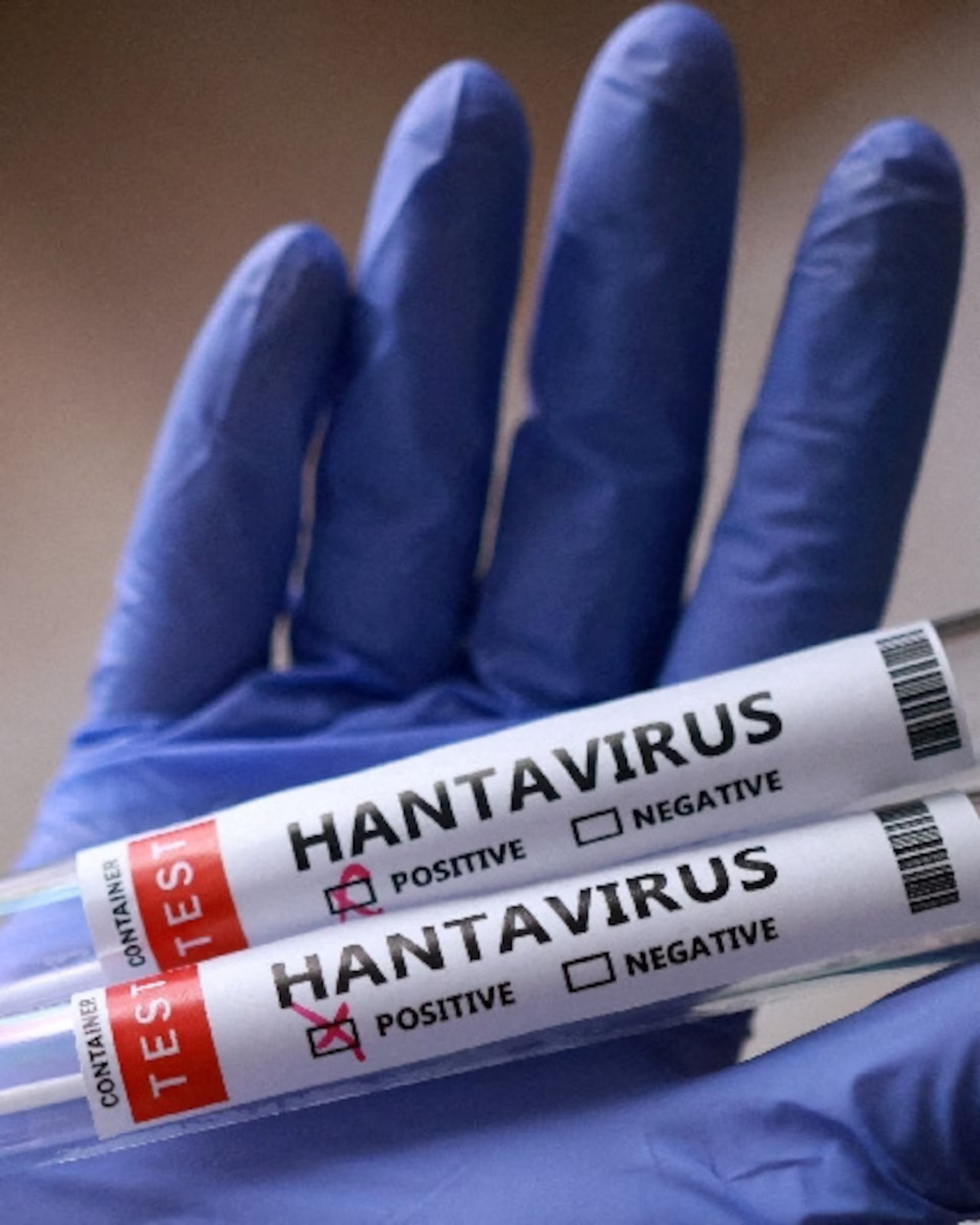
California health officials say the public faces an extremely low risk from a recent Andes hantavirus outbreak linked to an international cruise ship, even as state and federal agencies continue monitoring exposed passengers.
The California Department of Public Health (CDPH) announced that California residents were aboard the MV Hondius cruise ship, where an outbreak of Andes hantavirus was identified. One passenger has returned to California and is being monitored by local public health officials, while another remained aboard the ship as of the agency’s May 8 update.
State officials said they are coordinating closely with the U.S. Centers for Disease Control and Prevention (CDC), local health departments and international public health agencies as the situation develops.
“We understand that news of an unusual outbreak can be concerning,” said Dr. Erica Pan, California’s state public health officer and director of the California Department of Public Health. “At this time, local, state, national and global public health partners are working together to assess and care for people who may have been exposed and prevent spread of the virus.”
Authorities emphasized that Andes hantavirus differs from more contagious respiratory illnesses such as COVID-19 and influenza.
According to CDPH, years of public health experience in South America have shown the virus rarely spreads between people and usually requires prolonged close contact with an infected individual.
Health officials said exposed passengers are undergoing daily symptom monitoring, including temperature checks and health assessments. As of May 8, officials reported there were no known ill passengers aboard the ship.
Hantaviruses are spread through contact with infected rodent saliva, urine or droppings and can lead to hantavirus pulmonary syndrome, a rare but severe respiratory illness. Symptoms often begin with fever, headache, muscle aches and gastrointestinal problems before potentially progressing to life-threatening breathing complications.
According to CDPH, hantavirus pulmonary syndrome carries a fatality rate of roughly 30% to 40%, and there is currently no antiviral treatment. Medical experts say early supportive care is critical for survival.
California officials also said the state is supporting the national response through expanded laboratory testing. CDPH’s Viral and Rickettsial Disease Laboratory operates the nation’s only validated public health PCR test capable of detecting multiple hantavirus strains, including the Andes virus connected to the cruise outbreak.
Authorities said they will continue monitoring the situation.
________
Article By: Bo Tefu, California Black Media