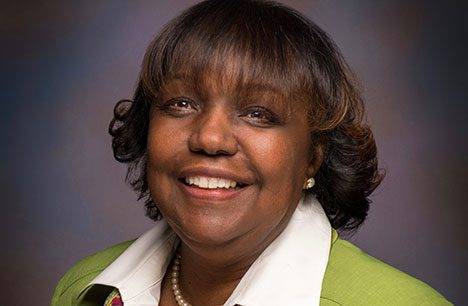
Dr. Judy White, former Riverside County Superintendent of Schools
Dear Friend,
As we continue to count down and prepare for the fourth annual Inland Empire Black Parent Summit, I have found myself reflecting on our previous gatherings and the people who have consistently shown up in support of Black parents and students.
One of those amazing leaders is Dr. Judy White, former Riverside County Superintendent of Schools. Dr. White has been a pioneer in so many ways, long before occupying that seat.
Recently, I sat down with Dr. White to better understand the roots of African American Parent Advisory Councils (AAPACs) in the Inland Empire.
Dr. White served as a principal in San Bernardino before moving into district leadership, eventually serving as assistant superintendent and deputy superintendent. Among her responsibilities was supporting English learners and the parent structures established to engage their families, English Learner Advisory Committees (ELACs) and District English Learner Advisory Committees (DELACs). These structures give parents a formal avenue to become informed, participate and advocate.
At the same time, Dr. White was looking at the data for African American students. Black students were experiencing academic and disciplinary disparities, while Black parents did not have the same type of formal, state-mandated parent structure.
Dr. White explained the philosophy that guided her:
“When you are an advocate for students, you will represent all, but you will also look at data to inform you, to see where you need to put more emphasis.”
Rather than waiting for the state to require something similar for Black parents, Dr. White and a team of parents, educators and community partners acted.
“Even though the law does not require that for African American parents,” she recalled telling her team, “we’re going to apply the law to our district.”
With the support of educators, community partners and parents, the district developed a Black parent structure modeled in part after the framework used for English learner families. That structure eventually became what many of us recognize today as the African American Parent Advisory Council (AAPAC), along with the district-level group, DAAPAC or DAAAC.
The work became part of a broader and lasting effort to address disparities affecting African American students. Dr. White worked alongside other educational and community leaders, including Dr. Len Cooper and Dr. Kennon Mitchell, to help shape San Bernardino City Unified’s Targeted Instructional Improvement Policy, formalizing attention to student achievement, parent and community involvement and accountability. That work continued to evolve, and in 2014 the district established its Task Force for African American Student Achievement to further examine disparities and develop strategies around parent engagement, student support, college readiness and cultural competency.
“Parents had to learn how to advocate for their students,” Dr. White explained. “They had to learn how to speak up and how to ensure accountability.”
Dr. White would later carry this commitment to Moreno Valley Unified School District, where she served as superintendent. There, she helped strengthen and formalize African American parent engagement, bringing greater structure to the work and emphasizing parent participation, organization and accountability.
Perhaps one of the most significant parts of this history is that the work lives on. Today, under the leadership of Dr. Wil Greer, San Bernardino City Unified’s Department of Equity and Targeted Student Achievement continues supporting AAPACs and DAAAC (or DAAPAC) while maintaining targeted attention to areas including English Language Arts, mathematics and attendance. The district has strengthened its commitment in these areas while investing in the connection between families, schools and student success. The work of breaking barriers continues, with the department growing to include trainers and academic coaches who help carry this work into schools and classrooms.
What makes this history especially meaningful to me is that during this same period, I was working in San Bernardino schools as a parent volunteer and became one of the first AAPAC presidents at my children’s school. Years later, when my children attended schools in neighboring districts, I helped bring AAPAC to those sites as well.
And that history matters today.
Because AAPACs are not state-mandated like ELACs and DELACs, their sustainability requires intentionality. When participation decreases or consistent support from educators, community members and district leadership is absent, AAPACs can diminish and eventually disappear.
At the same time, African American student enrollment continues to decline. According to the California Department of Education, African American enrollment statewide declined another 2 percent, or 5,532 students, in 2025–26. But fewer Black students cannot mean less attention to their needs. In fact, Dr. White’s reminder to follow the data becomes even more important. AAPACs, coupled with targeted support, provide a structure for families and educators to remain focused on the needs, progress and outcomes of African American students. Declining enrollment should never translate into declining advocacy, attention or investment.
If the Inland Empire helped lead the way in building and growing these groups, then perhaps we should also lead the way in strengthening them.
The Black Parent Summit provides one space for that strengthening to occur. AAPAC leaders at both the site and district levels throughout our region can meet, learn about one another’s work, hear from educators doing dynamic work and strengthen the relationships necessary to support Black students and families.
The structures we inherit did not simply appear. Someone recognized a need. Someone looked at the data. Parents spoke up. Educators listened. Together, they opened doors.
Our responsibility is not simply to walk through them, but to make sure they remain open for those coming behind us.
For more information or to register for the fourth annual Black Parent Summit at California State University, San Bernardino, visit BlackParentSummit.org.
Until next time, stay encouraged, remain committed, and be well.
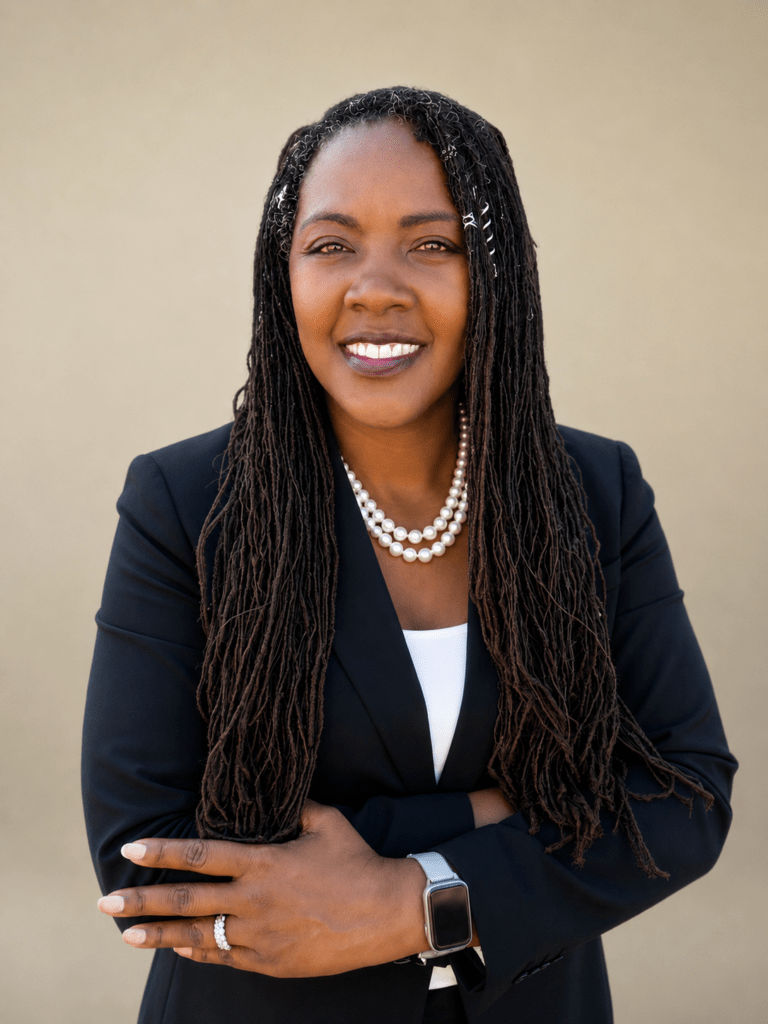
Dr. April Clay, CEO, Clay Counseling Solutions; CPO, Clay Counseling Foundation