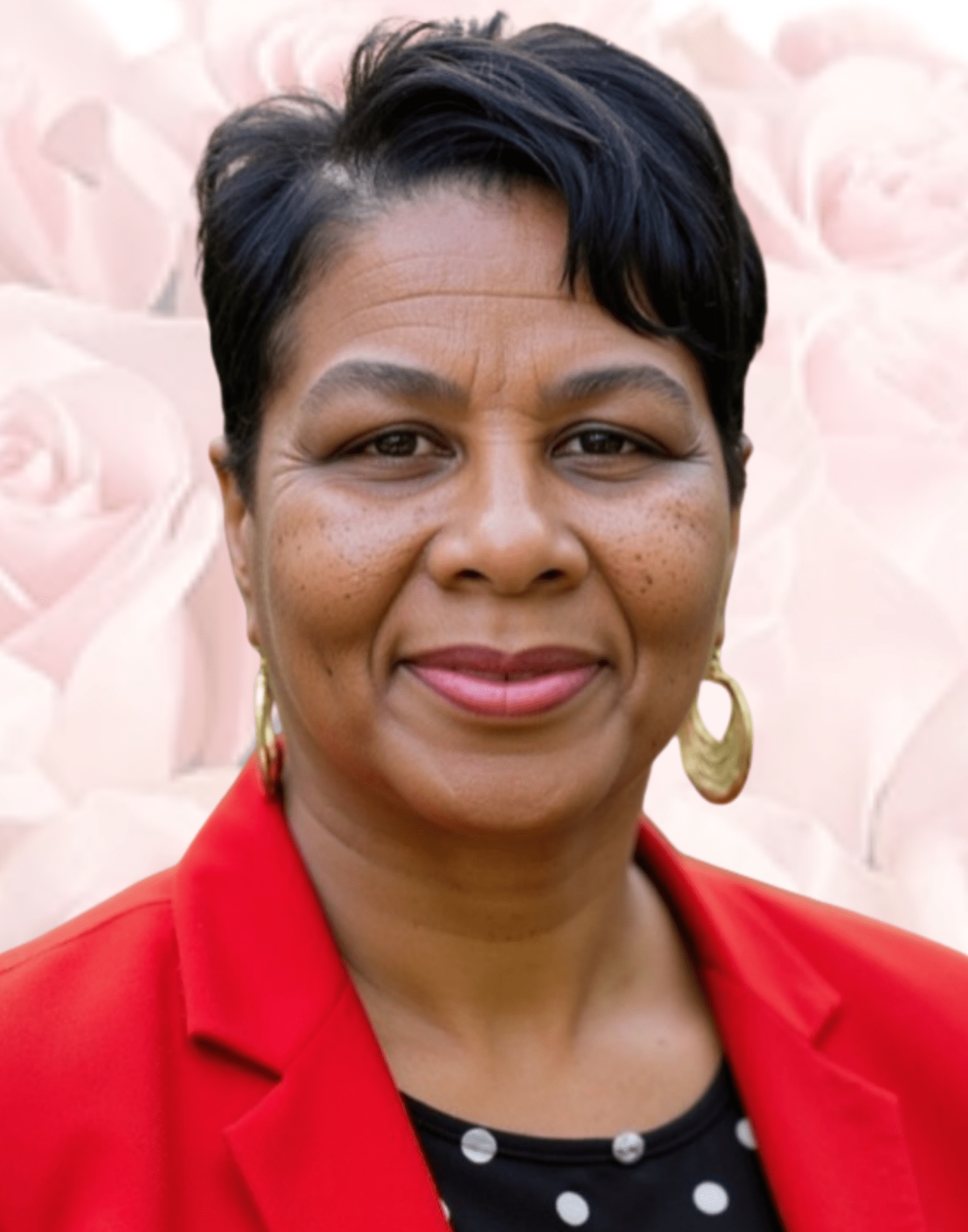

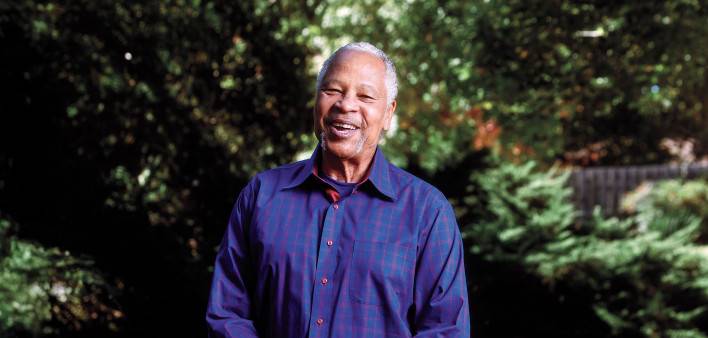
After a diagnosis of Stage IV prostate cancer, Euvon Jones turned his life around—with the help of his wife, Janet.
Euvon Jones is a self-professed guy’s guy. That means, in part, “if it don’t hurt, don’t fix it,” he says. For years, he and a partner ran an HVAC company, doing complicated commercial jobs in 35-story high-rises, hospitals and research facilities, putting in 12- to 18-hour days, six days a week, as Euvon provided for his wife, Janet, and their four kids in Maryland. And he was admittedly cavalier about his health.
“When you start work at four o’clock in the morning, you need that wake-up-call sugar hit. I’d pull that vending machine lever like it was a slot machine to get my Almond Joys, Tastykakes, Sno Balls—anything that had high-fructose corn syrup in it,” recalls Euvon, now 74. “So the way I ate, I always felt that I was doing good. And I laughed at our kids and Janet when they started to matriculate over to the organic side. I said, ‘You don’t have to do that. You know, look at me. I’m cut. I’m strong. I’m in good shape.’”
When it came to caring for his health, Euvon says, “I didn’t. Because I felt good. Getting screened? Blood tests? Never happened. Until I was 59 years old.”
That autumn, in 2011, he had a pain in his right hip he couldn’t get rid of. “I couldn’t fake it, couldn’t exercise it away, could not stop limping,” he says. An orthopedic surgeon gave him cortisone shots, but they only masked the pain. So one day after work, he got an MRI scan.
“It looked like Bugs Bunny cartoons when Yosemite Sam shot him up and he’s tattered,” Euvon says. “There were spots all over the place—in my bones, my blood, my lymph nodes, my back, my hips, down my legs, in my chest.” Alarmed, the technician called Euvon’s orthopedic surgeon, who had ordered the tests, and set up an immediate appointment. There, he learned that he might have multiple myeloma—a type of blood cancer—and not the hip arthritis he’d anticipated. That doctor, in turn, sent him straight to an oncologist, who also thought the evidence pointed to multiple myeloma.
Holding It Together
Afterward, when Euvon arrived home, neither he nor Janet cried or bared their hearts to each other. “We were both in the Twilight Zone,” he says. “I was doing everything I could to try to keep it together because I couldn’t believe that the big C was a part of my life now. And why? I thought I did everything right.” The couple had never had a conversation about cancer, even though Euvon’s dad and all nine of his dad’s siblings had had cancer. Maybe if they didn’t talk about it, it wouldn’t be real.
But they couldn’t remain in denial for long. Euvon returned to the oncologist for more tests and then, a couple of weeks later, the results. “The good news is, you don’t have multiple myeloma,” she told them. “The bad news is you do have Stage IV prostate cancer.” When Euvon asked how many stages there were, she told him there were no more stages beyond the fourth and that the cancer had metastasized, or spread. His prostate specific antigen (PSA) test score was 398; healthy results depend on a man’s age, but they are generally under 10.
“I never talked about it,” Euvon says. “But I was a dead man walking.”
The next step was a biopsy of his prostate and bones to confirm the diagnosis. After a quick prayer, the couple decided to have it done at Georgetown University Hospital, which had been a client of Euvon’s and has a comprehensive cancer center. There, they found an oncologist who specializes in Stage IV prostate cancer. She came up with a treatment plan: two types of androgen deprivation therapy plus injections to strengthen his bones and prevent fractures.
Hope will give you a desire to be proactive, to do research.
Euvon had limited treatment options because his cancer had already spread so widely. “I wasn’t a candidate for chemo, radiation or surgery,” he says, “because they would’ve had to dice me up like a filleted piece of fish.”
The drugs worked for about a year and brought his PSA down to 0.1. But near the end of 2012, it started to rebound. “Once again, it got real somber, crickets in the house,” Euvon recalls. That’s when his oncologist suggested he participate in a clinical trial for an immunotherapy that the Food and Drug Administration had recently approved as the first therapeutic cancer vaccine.
“Our culture is not one that gravitates toward clinical trials,” Janet says. “But we said, you know, we have nothing to lose. Let’s go for it.”
In 2013, in three sessions over six weeks, Euvon’s blood was drawn and the T cells (a type of white blood cells) were taught to attack prostate cancer cells before being reintroduced to his body to reboot his immune system. Since then, he’s been on a second-line medication plus a continuation of the sex-hormone-suppressing shots he’d been on earlier.
In 2019, Euvon’s oncologist called the couple into her office, and, according to Janet, she said, “I don’t know what is going on here. There is no precedent, but we can’t find the cancer. Your lymph nodes are clearing up; your bone marrow is replenishing itself.”
While other men have lived an extra six years following this particular immunotherapy, Euvon has survived nearly 15 years—perhaps, in part, because the vaccine has been more effective among African Americans.
A Whole-Life Makeover
Another contributor to Euvon’s exceptional survival could be the changes that Janet introduced to the couple’s lives. His diagnosis initially led her to prayer. “I’m losing my husband, and I had to ask, What do I do to keep my sanity?” she says. The answer: become a student of the diagnosis. So she started looking up what prostate cancer is, what the symptoms are. “It gave me something to do, and it took away some of my sadness because I had to concentrate.”
Her research on the internet led Janet to focus her energy on their diet and nutrition. “The more I learned, the more I felt that I could at least give him quality of life while he was getting these treatments.
“I was looking up everything,” she recalls. She read labels. “If I couldn’t pronounce it, I wouldn’t buy it.” She read about cancer-causing chemicals in charcoal-grilled food, and they stopped grilling. She determined which foods needed to be organic or grass-fed to avoid pesticides. She checked mercury levels before buying seafood.
What she didn’t find in her searches was a lot about caregiving for prostate cancer patients. “You really have to get to know your husband or father or son or brother on a whole other level,” she says. “You’re reintroducing yourself to someone who has cancer. And it’s a male thing, so it deals with their manhood.” She was sensitive to how bad Euvon was feeling and wouldn’t let him fall into a hole because of “how I should have done things different,” he says.
“The worst thing that can happen to a man is to get through life and feel like all the things that we did to try to make things better, we lost,” he continues. “And losing in this life journey was a tough place to be…. I just didn’t want to think about not being here around my family. Those were some of the toughest feelings I ever had.”
Janet involved Euvon in organic cooking and growing their own produce. “I included him so he could be interested in what was going on and could appreciate eating differently. So now we’re a team,” she says. Farmer Brown, as she playfully calls him, “has a wonderful green thumb, and he has grown tomatoes, cucumbers, peppers and herbs, like oregano and rosemary. We use all of them on a daily basis because they’re cancer fighters.” They have incorporated her research into a way of eating that still includes foods like the steak he loves, but cooked with garlic, sweet peppers, onions, celery and plenty of herbs, along with salads of arugula, romaine, kale, baby spinach or endive. They enjoy oatmeal. Greek yogurt. Pomegranates. Ceylon cinnamon—the healthiest, she says.
But Janet didn’t stop there—she tackled potential toxins in their home environment too. “We ended up pulling up our carpets and putting down flooring. I changed the shower filters. We put in air purifiers. And I started making our deodorant,” Janet says. She also replaced plastic food storage containers with glass and silicone ones.
Giving Back
Euvon and Janet are both involved in advocacy to help other African American men get screened for prostate cancer, go for health checkups, understand their genetic susceptibility and learn about immunotherapy. They have worked with numerous nonprofit organizations, including the Prostate Cancer Foundation, Zero Prostate Cancer, Prostate Health Education Network and Emmanual Health Education, through which they’ve done outreach to Black fraternities across the United States. “We’ve spoken to rooms of 200; one of the largest was 400 guys,” Euvon says. “When I talk to people about immunotherapy, it’s like it’s the first time they’ve heard of it—and this thing was approved 15 years ago.”
They have also advocated for research and funding from Congress. Euvon spoke with Representative John Lewis about the need for cancer legislation six months before he died of pancreatic cancer.
“When you receive a devastating diagnosis, you still have to respond with a sense of hope,” Janet says. “Hope will give you a desire to be proactive, to do research, to be willing to cry and scream, to share your hurt.
“It’s a team effort, a team battle. You cannot fight it alone. If you don’t have family, you have a friend,” she continues. “There are support groups. Be active if you can, and if you can’t, find someone who can on your behalf.”
“Humble yourself. Talk to yourself first,” Euvon says. “Admit your stuff and then realize that you gotta have some skin in the game. And that starts with making sure you get screened. Stay on top of your health because you’re not helping anybody if you never get checked up. As I did. Once again, my story is for What. Not. To. Do.
“But now that I do know what to do, oh my goodness. I feel like I live at the doctor’s. But that allows me to be able to laugh,” Euvon says. “I know where I am. I know what’s going on. I have information. I have things to be proactive about. And by the grace of God, I have support.”
Janet Jones’s Tips for Caregivers
Janet compiled notes about her and her husband’s story into a faith-based book she published in 2015 titled The Trial of Stage IV Prostate Cancer. Some of her suggestions include:
-Connect with other caregivers. “I have a couple of cousins who also were caregivers, so we were able to exchange ideas, cry, talk and even party together,” she says.
-Watch a comedy. When you’re feeling down and out, watch a classic like It’s a Mad, Mad, Mad, Mad World or Abbott and Costello or The Three Stooges—something that makes you laugh.
-Rediscover a passion. Return to an activity you enjoyed when you were young. Janet was in an a cappella group in the 1970s, and they are back together singing again.
-Concentrate more on living. Create a list of things you want to do in life from here on out. Make sure there’s a balance between caregiving and taking time for yourself.