Dear Friend,
With Fall just around the corner, we want to turn our attention to mental health as we continue our countdown to the fourth annual Black Parent Summit, coming to the Inland Empire on October 17.
Did you know? A 2023 study of more than 4,200 Black adolescents found that as their sense of belonging at school decreased, their risk for suicidal thoughts and suicide attempts increased by 35 percent.
This week, we want to focus on Black mental health and the practices that support Black students’ well-being. The connection between school experiences and suicidal thoughts is rarely discussed, yet I remember experiencing isolation, colorism, microaggressions, and racism as a Black student in California schools, many of the same challenges students face today. It is a less-discussed reality that reflects the experiences of far too many students, and one we cannot afford to overlook.
While studies continue to show a connection between a student’s sense of belonging and mental health, surveys also point to Black students in California reporting a lower sense of belonging than other students. Yet little attention seems to be given to replicating the schools, programs, and practices that help these students feel that they belong. In fact, we seem to be moving in the opposite direction, with programs and services for Black students increasingly questioned or reduced. That makes it even more important to revisit the historical work that first illuminated the often unseen cost of being “othered.”
To go forward, we first need to glance back. Not a full look, but enough of a rearview-mirror glance to understand where we came from and allow that context to inform us. Consider the original doll studies of Drs. Kenneth and Mamie Clark. When that work was conducted in the 1940s and 1950s, it helped us understand how segregation and the culture of the time created a societal norm in which Blackness was too often associated with what was negative, even in the eyes of Black children.
In 2010, CNN’s Anderson Cooper 360° revisited similar questions through a study designed by Dr. Margaret Beale Spencer. The follow-up showed that these messages were not only being absorbed by Black children, but were also reflected in responses from White children, who often associated lighter skin with more positive qualities and darker skin with more negative ones. The larger body of work reminds us that children across communities can absorb powerful messages about race, color, value, and belonging.
By and large, the message has been consistent: the darker the skin, the more likely children are to encounter disparaging assumptions, not only about complexion but also about worth, ability, and potential. These messages touch a child’s sense of self and can shape whether that child feels a true sense of belonging.
The work did not stop there. In the 1960s, Jane Elliott’s well-known blue-eye/brown-eye classroom exercise explored discrimination, isolation, and mistreatment by dividing familiar classmates according to eye color and assigning one group superior status while treating the other as inferior. What followed highlighted how quickly othering can take hold, even among children who know one another, and how exclusion and appearance-based bias can affect confidence, behavior, and classroom performance.
Taken together, examples like these make it difficult to ignore what many students are still telling us. Students who experience colorism, racial bias, isolation, or mistreatment on campus may experience a decreased sense of belonging alongside psychological impacts that affect academic performance, behavior, attendance, engagement, and overall wellness. When we connect that history to more recent research linking decreased school belonging among Black adolescents with increased risk for suicidal thoughts and attempts, we are reminded that belonging is not a side issue. It is central to wellness and safety.
In the late 1980s, as a student in the San Gabriel Valley, my sister and I desired more positive Black peer interaction and helped launch our school’s first Black Student Union. Decades later, while co-leading campus interviews across the Inland Empire in the mid-2010s, our team heard from hundreds of Black students. Again and again, students told us they had never been in an all-Black space that felt affirming. When they did experience one, many described feeling pleasantly surprised. For some, it was the first time being Black on campus felt like a positive. That insight continues to energize the work happening today to bring Black students together, including through Black Student Unions.
Black Student Unions hold a unique space, not only in my own story, but in the hearts of many Black educators and families across the state. Yet too often, our students encounter BSUs that are under-attended, under-celebrated, or under-supported. Sometimes, they do not exist at all. That is why it matters to say plainly what BSUs are and what they are not. They are not about exclusion. They are about affirmation. Even on campuses where Black students have strong cross-racial friendships, BSUs offer something distinct: a space to be seen, heard, and valued without explanation.
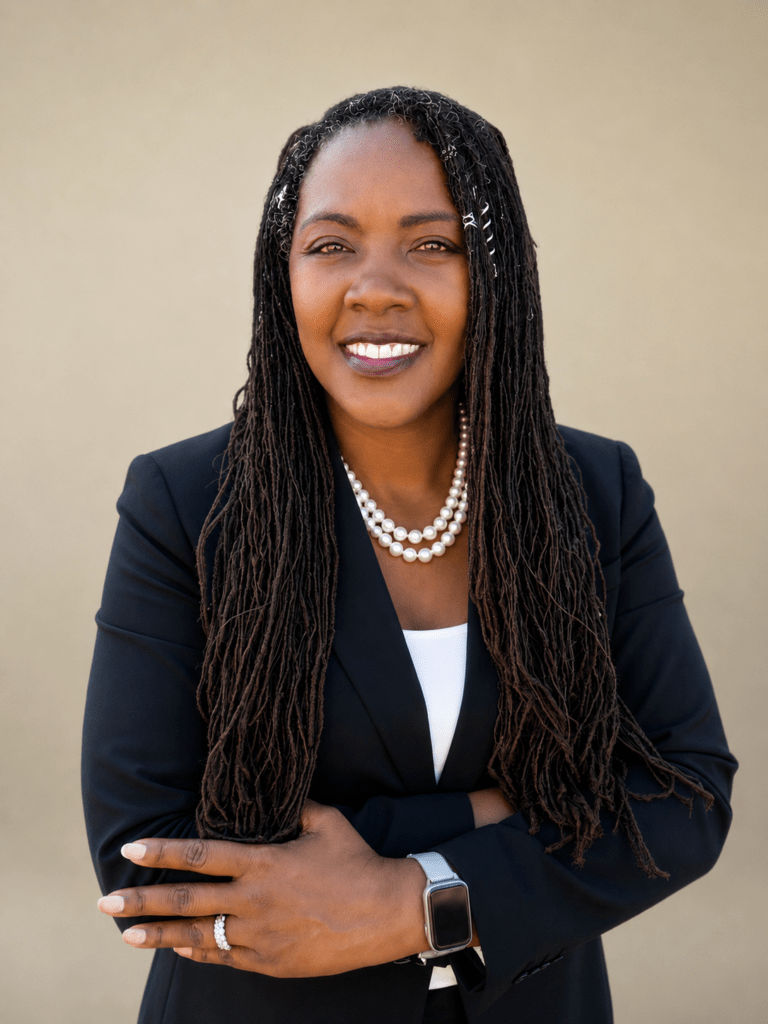
Dr. April Clay, CEO, Clay Counseling Solutions; CPO, Clay Counseling Foundation
Black Student Unions are designed to bring students together in affirming spaces to share culture, build community, identify resources on and off campus, and engage in positive activities such as guest speakers, campus visits, field trips, fundraising, and service. These are not extras. They are conditions that can help protect students and create a sense of belonging where it might otherwise be missing.
As a lead-up to the Black Parent Summit, the University of California, Riverside, will host our keynote speaker, Dr. William A. Smith, to speak about Black mental wellness, microaggressions, and resilience. The convening, intentionally framed as a BSU Community Gathering, creates room for Black students from across the Inland Empire to come together, connect, network, and learn from one another. It signals that affirmation is not an afterthought. It is part of how we support students as they grow.
As we continue this countdown to the Black Parent Summit, my hope is that parents, educators, students, and community leaders will see belonging as more than a feeling. It is a protective factor. It is part of how we help students stay connected, stay encouraged, and believe they have a place in the future being built around them. Every student deserves to know there is a place where they are not merely tolerated, but welcomed, affirmed, and expected to thrive.
For more information and to register for the fourth annual Black Parent Summit at California State University, San Bernardino, on Saturday, October 17, visit BlackParentSummit.org. All are welcome, and there is no cost to attend.
Until next time, stay encouraged, remain committed, and be well.
_________
Article By: Dr. April Clay