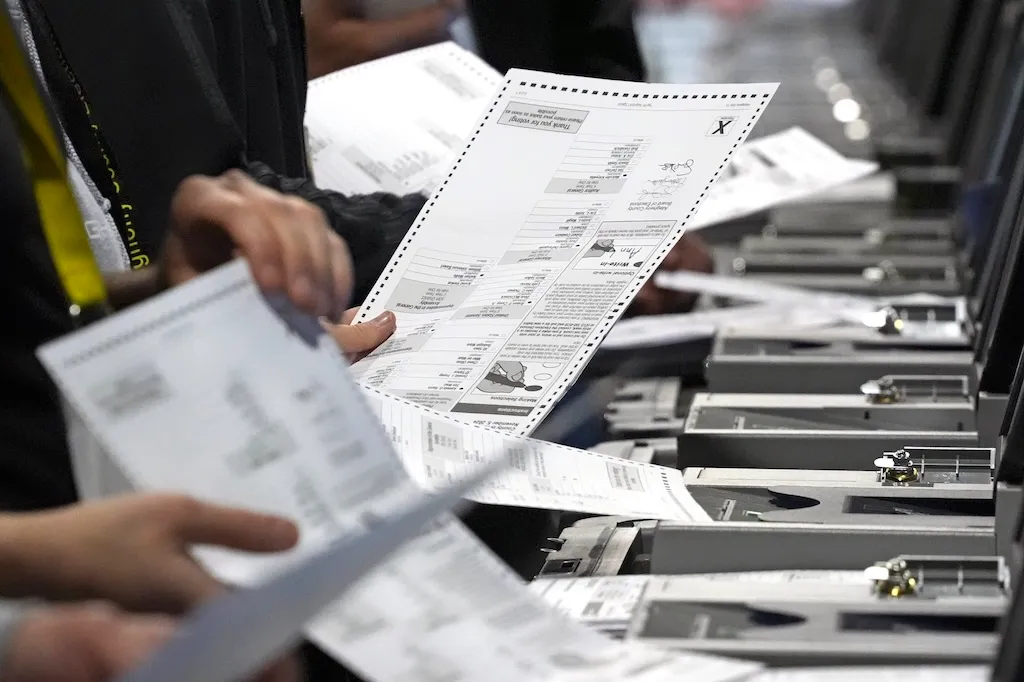
Statewide — California voters ages 18 to 24 are more likely than older voters to have their mail ballots rejected for arriving late, according to a new report compiled by Public Policy Institute of California.
The report found that 3.1% of ballots mailed by voters ages 18 to 24 were rejected for being late during the 2025 Proposition (Prop) 50 special election. That compared with no more than 0.5% among voters ages 65 and older across the 2022, 2024, and 2025 elections studied.
The gap was also evident in previous elections. Among voters ages 18 to 24, 3.9% of mailed ballots were rejected and marked ‘as late’ in 2022 and 1.7% in 2024. Researchers found that age was by far the strongest demographic factor associated with late-ballot rejection, even after accounting for other voter characteristics.
The report also found that voters with less recent voting experience were more likely to return their ballots late. In the elections studied, voters who had not participated in the previous general election had late-ballot rejection rates of 2.6%, 1.2%, and 2.6%, compared with 1.1%, 0.3%, and 1.2% among voters who had voted previously.
Overall, late ballots accounted for 0.7% of all mail ballots received by California election officials during the 2025 Prop 50 election, up from 0.6% in 2022 and 0.3% in 2024. The rate rose to 1.1% in the 2026 statewide primary.
The researchers also examined whether changes by the U.S. Postal Service contributed to the increase. They found that late-ballot rejection rates in ZIP codes affected by the USPS Regional Transportation Optimization program increased 0.6 percentage points more than in comparable ZIP codes between 2024 and 2025.
However, the report found that the USPS changes accounted for only about 19% of the overall statewide increase in rejected late ballots because the affected ZIP codes represented about one-quarter of mailed ballots.
The researchers said the remaining increase requires further investigation. They recommended stronger outreach encouraging voters, particularly younger voters and those in affected ZIP codes, to return ballots early or use in-person drop-off options.
The report also urged state officials to continue pressing the USPS for election-period accommodations, including evening pickup in areas affected by the changes.
_____
Bo Tefu, CBM contributed to this article