
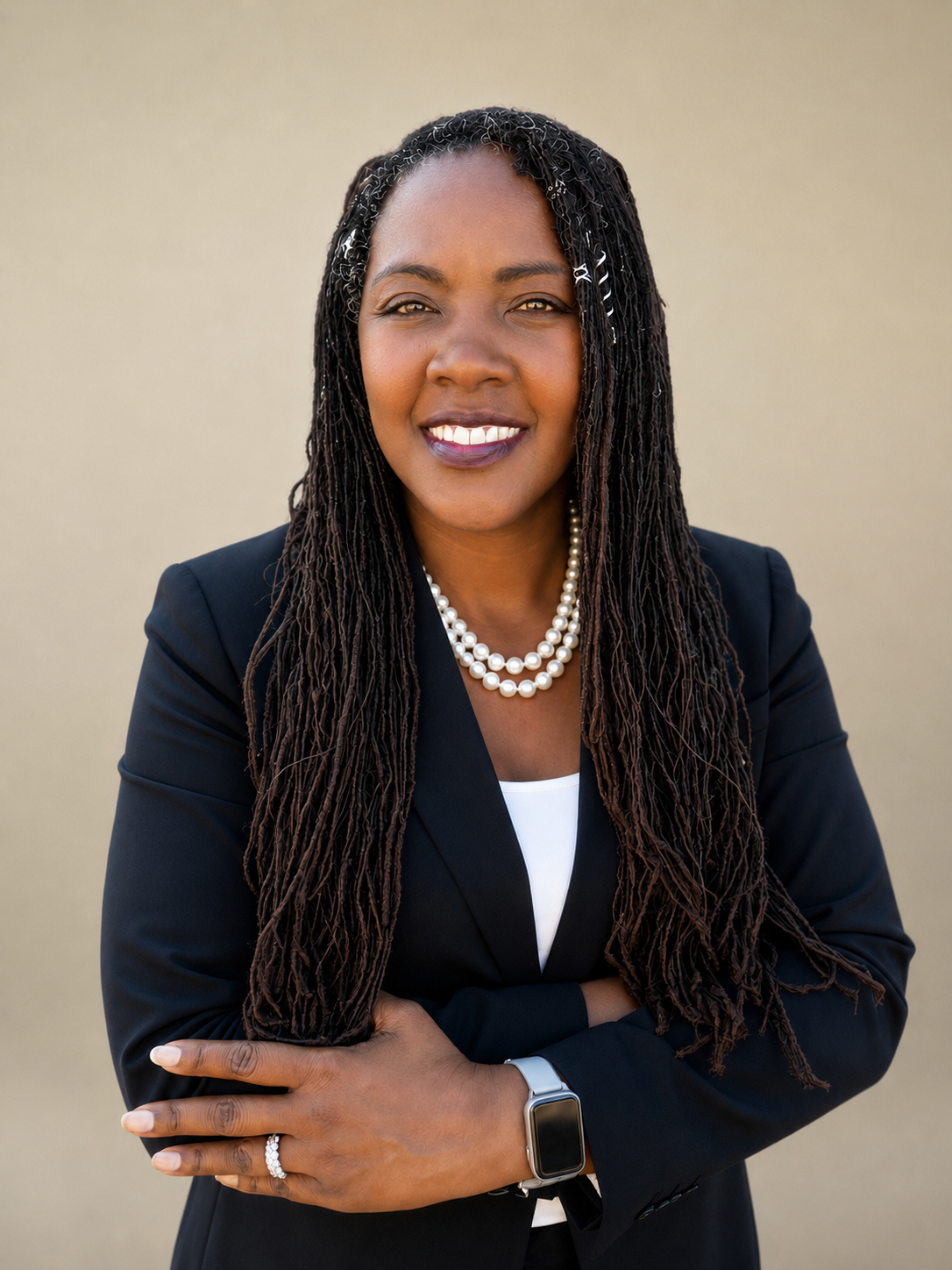
Dr. April M. Clay, CEO of Clay Counseling Solutions
Dear Friend,
Have you ever been trying to finish a task when a physical need became so overwhelming that you could no longer focus on the task itself?
I have. I used to wait until the day was almost over before taking my first bite of food, moving on nothing but coffee. Once that coffee burned out, I realized I hadn’t paused to breathe, much less taken care of my body. I was so far behind on water that I’d never catch up. And oh, by the way, the headache I felt forming? I was hungry.
By then, it was not just a lack of focus. It was my body screaming to get my attention. And I would find myself asking: How did I let it go this far?
When the Brain Runs Low
Did you know the brain makes up only about 2 percent of our body weight but uses about 20 percent of our body’s energy? It’s fueled by glucose, the sugar we get from food. So when we skip meals, the organ doing all the work isn’t getting the fuel it needs.
And it’s not only our thinking that suffers. In a 2022 PLOS One study, 64 adults reported their hunger and mood five times a day for three weeks. The hungrier they were, the more angry or irritable they felt, and the less pleasure they experienced. So yes, hangry is a real thing. It’s when our actual needs impact our mood. This is where our mental and physical health begin to blur.
Just Like Wilson
Connection is another need we neglect. Remember the volleyball in Cast Away? Tom Hanks’s character painted a face on it and named it Wilson to meet his need for companionship. Similarly, we may need a phone call, a familiar voice, a gentle hug, or someone to hold our hand to remind us that we’re not alone.
The science behind the healing power of human interaction begins at birth. When my daughter had her first child, the hospital told me about the Golden Hour, the first hour after birth, when parents are allowed uninterrupted skin-to-skin contact with their newborn. That contact promotes the release of oxytocin, often called the bonding hormone, and helps regulate the body’s stress response.
That need doesn’t disappear when we grow up. In a 2006 study, when married women faced the threat of a mild shock, simply holding their husband’s hand reduced activity in brain regions associated with the threat response. Touch isn’t something we should discount or dismiss. Sometimes we need it and don’t even realize it, and I’ve been guilty of that. The simple hug my grandson gives me is like medicine, as I tell him.
At the same time, we also need time apart. A girlfriend of mine often talks about her need for alone time, and science supports this. A 2023 study in Scientific Reports found there’s no one-size-fits-all balance between time alone and time with others. Solitude we choose can restore us; isolation we don’t choose can feel very different. The priority is knowing our own rhythm.
A Glance Back at the Basics
Decades ago, psychologist Abraham Maslow introduced the hierarchy of needs, and it still resonates today. At its foundation are our most basic physiological needs: food, water, and sleep. Maslow proposed that when these go unmet, they become harder to ignore, competing with the needs above them, like belonging, achievement, and purpose, or, in my case, completing a task at work.
Whether we’re a student, parent, educator, or administrator, this hierarchy of needs is paramount to our success. When our basic needs go unmet, much of what we’re working toward can become a lost point.
Tips from a Therapist
Take inventory. The next time you notice you’re off point, stop, breathe, and ask: What is my body trying to tell me? Do I need a break? Food? Sleep? Or is something else missing?
Honor the answer. Go to the restroom, grab a snack, drink some water, stand and stretch. Children of all ages need this too, especially when they’re using all their brain cells for academics.
Try a 15-minute reset. When we haven’t had enough sleep, or good sleep, a quick nap can help us get back on task. Some people swear by the old trick of sitting upright with an ink pen in hand; if they drift too deeply, the pen drops and wakes them. Others set an alarm or have a friend call. The goal is not to quit. It’s to step away and get the fuel your body needs.
Our bodies will always find a way to get our attention. Let’s learn to listen before they have to scream.
Speaking of taking care of ourselves and one another, I invite you to join us for the 4th Annual Inland Empire Black Parent Summit on Saturday, October 17, at Cal State San Bernardino. There’s no cost, and all are welcome. Register at BlackParentSummit.org.
Until next time, stay encouraged, remain committed, and be well.
Reference List
Swami, V., Hochstöger, S., Kargl, E., & Stieger, S. (2022). Hangry in the field. PLOS One, 17(7), e0269629. https://journals.plos.org/plosone/article?id=10.1371/journal.pone.0269629
Coan, J. A., Schaefer, H. S., & Davidson, R. J. (2006). Lending a hand: Social regulation of the neural response to threat. Psychological Science, 17, 1032–1039. https://apsychoserver.psychofizz.psych.arizona.edu/JJBAReprints/PSYC501A/Readings/Coan%20Schaefer%20Davidson%20Psych%20Science%202006.pdf
Weinstein, N., Vuorre, M., Adams, M., & Nguyen, T. (2023). Balance between solitude and socializing. Scientific Reports, 13, 21160. https://www.nature.com/articles/s41598-023-44507-7
Holt-Lunstad, J., Smith, T. B., & Layton, J. B. (2010). Social relationships and mortality risk. PLOS Medicine, 7(7), e1000316. https://journals.plos.org/plosmedicine/article?id=10.1371/journal.pmed.1000316 (not used in draft; held in reserve)
Nelson, C. A., Fox, N. A., & Zeanah, C. H. (2023). Romania’s abandoned children. Review, open access: https://pmc.ncbi.nlm.nih.gov/articles/PMC10977996/ (not used in draft)
McLaughlin et al. (2015). Causal effects of the early caregiving environment on development of stress response systems in children. PNAS. https://www.pnas.org/doi/10.1073/pnas.1423363112 (not used in draft)
Smith, M. A., Riby, L. M., van Eekelen, J. A. M., & Foster, J. K. (2011). Glucose enhancement of human memory. Neuroscience & Biobehavioral Reviews, 35, 770–783. https://pubmed.ncbi.nlm.nih.gov/20883717/ (background; effect strongest in older adults)
