

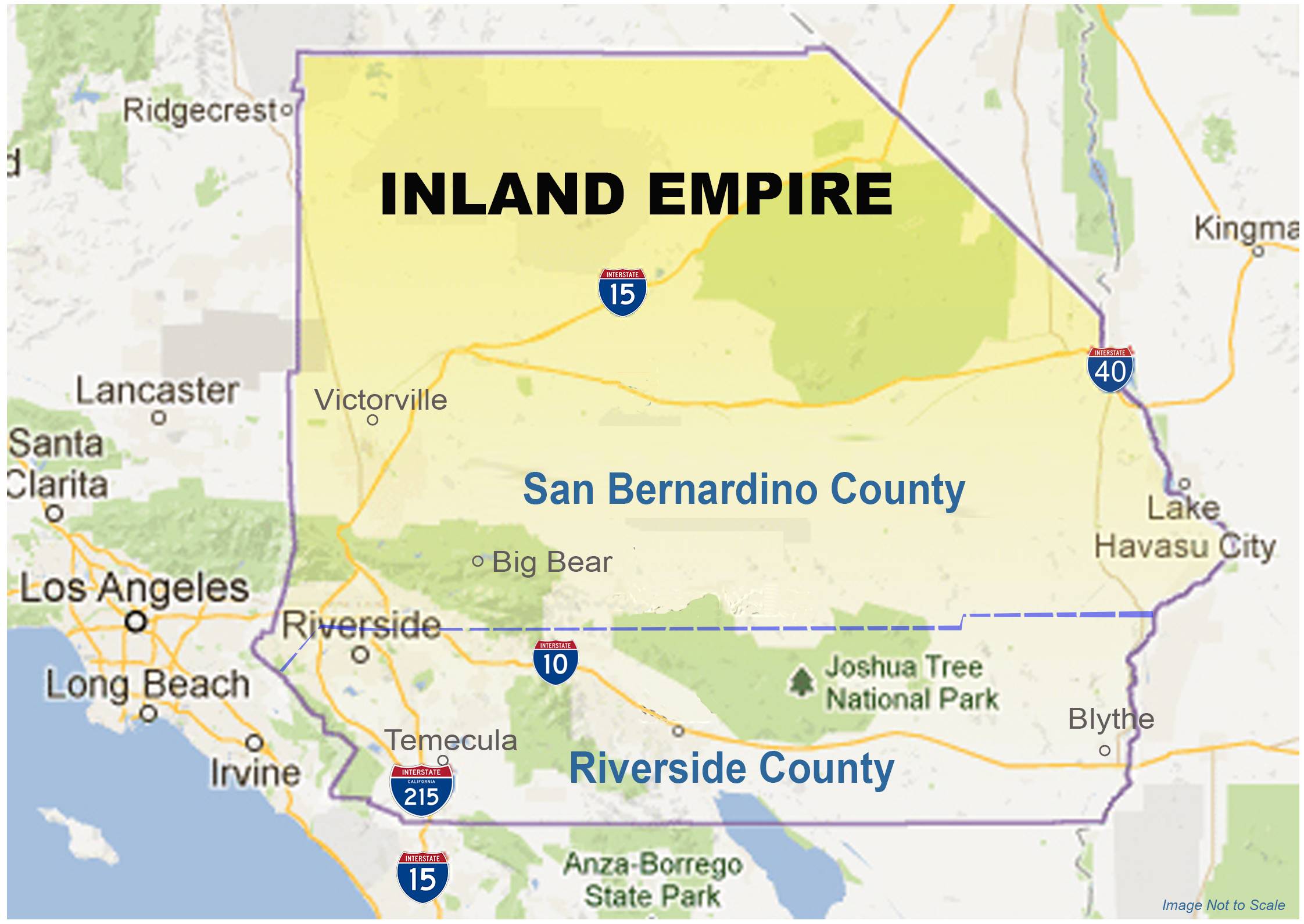
Riverside, CA — In recognition of Black History Month, Mapping Black California has released a comprehensive update to the “M.E.C.C.A. IE Fund Report (formerly the BEI Data Report),” originally commissioned in 2023 by M.E.C.C.A. IE Fund at the Inland Empire Community Foundation. Two years later, the report highlights the Inland Empire’s status as a region experiencing strong economic and public infrastructure development in the face of cooling statewide migration and rising living costs. Funding for the M.E.C.C.A. IE Fund Report was made possible through generous support from Edison International.
The M.E.C.C.A. IE Fund Report shows an in-depth look at the socioeconomic landscape and conditions affecting the 4.7 million residents of the Inland Empire.
“The data shows great improvements over the past two years,” says Alex Reed, Project Manager for Mapping Black California. “We can see really encouraging changes in educational attainment and a rise in higher-paying jobs, but the large gaps between the racial/ethnic groups and between men and women across health, pay, and housing access, specifically for Black and Latino residents, show us there’s still a lot to do. This isn’t just statistics; these are the real barriers all our neighbors face.”
The report highlights the strength of the IE’s residents despite the ongoing nationwide erosion of real income:
Educational attainment continues to rise, with the majority of adults in most ethnic groups holding at least some college education.
The region’s largest employment sector, management, business, science, and arts, reflects growing investment in skilled positions.
Civic engagement remains strong, with Black and White residents showing high voter registration and turnout in Presidential elections.
“This report presents a clear and honest account of the Inland Empire. Our residents are working hard, pursuing education, and remaining civically engaged, even as existing systems fail to provide fair opportunities,” said Dina Walker, President and CEO of BLU Educational Foundation and co-founder of MECCA IE. “The resilience of Black, Latino, and other communities of color is evident, but resilience should not be necessary for survival. Unless we address racial and gender wage gaps, improve access to prenatal care, and establish pathways to skilled, well-paid careers, the region’s growth will continue to leave many families behind.
While the region’s population has seen steady diversification over the past 30 years, the Black and Hispanic/Latino communities continue to grapple with disparities in critical areas like health, education, and housing.
Birthing people in the Inland Empire are less likely to receive adequate prenatal care throughout their pregnancy. This is particularly true for Black residents, with only 64.7% receiving adequate care compared to California’s state average of 85%.
While IE residents are graduating high school and attending college at increasing rates, the broader workforce lags. Specifically, over 50% of the employed Latino population has no college attainment and are overrepresented in non-skilled roles.
The regional wage gap falls starkly along racial and gender lines, with women earning $10,000-15,000 less than men. Latino and Asian workers experience the largest gender pay gaps.
“This updated report reminds us that behind every data point is a person,” said Dr. Paulette Brown-Hinds, publisher of Black Voice News, founder of Mapping Black California. “At Mapping Black California, we see data as a tool for truth-telling and accountability. It helps us track progress, but it also makes clear where systems are still falling short. The Inland Empire is growing, but growth alone isn’t enough if too many residents are still locked out of real opportunity.”
“The disparities in this report call for action. By grounding our grantmaking, programs, and partnerships in data, we ensure our investments are responsive and equitable,” said Michelle Decker, President and CEO of IECF. “Our diverse communities in the IE deserve greater investment and support to change the inequitable conditions they and their children face, to expand wealth opportunities, educational access, and jobs.”
To explore the refreshed M.E.C.C.A. IE Fund report in full, visit the M.E.C.C.A IE Data Report page.
To learn more about the M.E.C.C.A. IE Fund, visit: https://www.iegives.org/funds/meccaiefund/
About the Inland Empire Community Foundation:
Founded in 1941, the Inland Empire Community Foundation is the oldest and largest community foundation in Inland Southern California. We partner with individuals, families and corporations to build a culture of philanthropy. Over the past 25 years, we have given out over $225 million in grants and scholarships. For more information visit the IECF’s website at www.iegives.org. Be a part of our conversation on Facebook, Instagram, Twitter and LinkedIn.