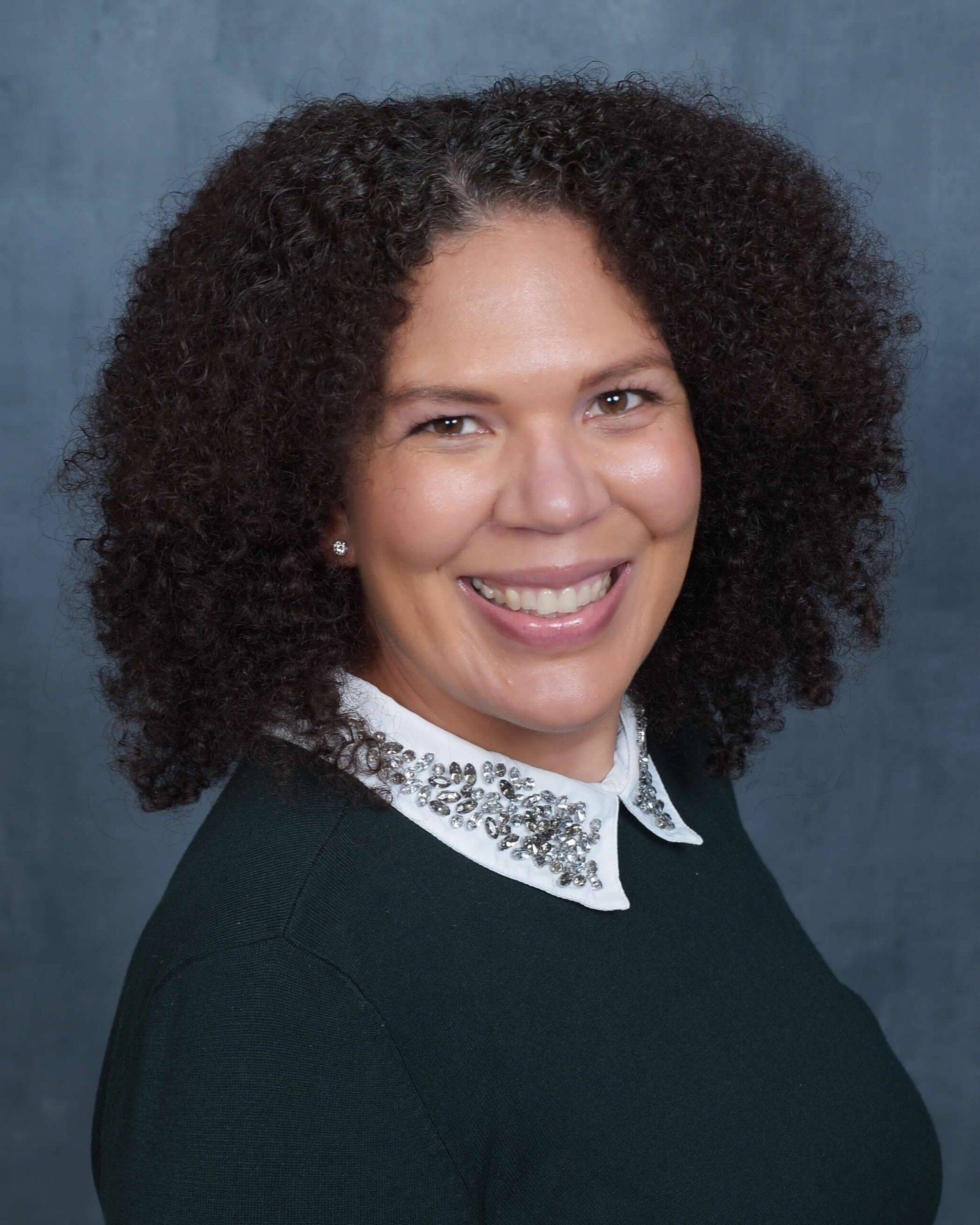

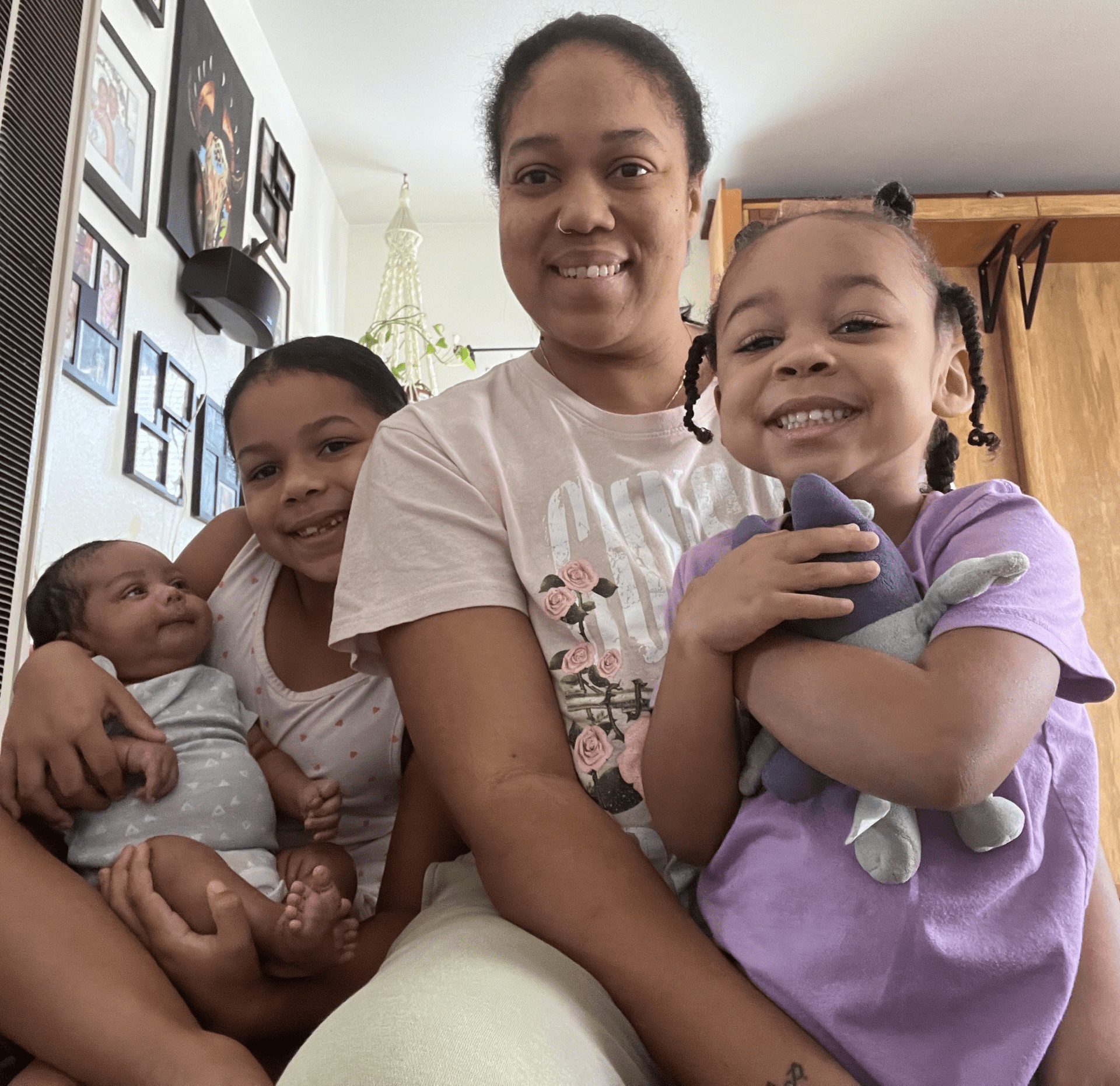
Gnae Dismuske and her children
Statewide — Gnae Dismuke experienced a miscarriage at 11 weeks in 2017 and later gave birth to three children, now ages six, four, and one month.
Dismuke says she’s encouraged that programs exist to advocate for safer birth outcomes for Black women like her. However, when it comes to actual practices of medical facilities and doctors, she has a conflicted perspective – a point of view shaped by her three birth experiences: one in a hospital, one at home, and another in a hospital.
Dismuke, who lives in Los Angeles, addressed her birthing challenges with the help of Black Infant Health in partnership with the Long Beach Public Health and Human Services Department. They supplied doulas and nurses who visited her home during her last birth and advocated on her behalf.
“The nurse was able to move mountains quickly that I wasn’t able to move with the medical industry, with just advocating for me, asking for things like physical therapy,” she stated.
Statistics show that Black women in California are three to four times more likely than White women to die from pregnancy-related complications. Some birth equity advocates argue that expanding access to midwifery care and certified birth doulas could help reduce these disparities.
Others emphasize the need for education, noting barriers such as high costs for preferred birthing options and managing high-risk factors like hypertension and stress related to systemic discrimination.
“Doctors don’t want to see you until almost the end of the first trimester. That’s 11 to 12 weeks in. Many things could go wrong,” Dismuke said, recalling experiencing spontaneous bleeding in the first trimester for all three of her births.
“Groups like M.O.R.E. Mothers, a nonprofit maternal health-focused community-based organization in Long Beach, are part of programmatic solutions. They provide classes and workshops,” she added.
To assist mothers like Dismuke, the Department of Health Care Services (DHCS) added doula services to preventive services covered under Medi-Cal in 2023. Still, many mothers don’t know these benefits exist because Medi-Cal coverage is based on income, but those pregnant qualify at higher income levels than other adults.
“I thought [a doula] was for people who had money, who had private health insurance and stuff like that,” said a Medi-Cal beneficiary who asked not to be identified.
Under Assembly Bill (AB) 133, doula services were formally included as a “covered preventive service” under Medi-Cal in 2023. AB 133 was co-authored by former State Sen. Nancy Skinner (D-Berkeley) and Sen. Akilah Weber (D-San Diego), a pediatrician. It built on the California “Momnibus” Act, passed in 2021, aimed at improving maternal and infant health outcomes among Medi-Cal members.
“Access to doula services means that any time in their trimesters, they can have eight sessions with their doula, whether virtual, Telehealth or in-person. The doulas are with them through their labor and delivery, and can help clients, partners, families, be prepared with a birth plan, education, and understanding labor stages,” said Los Angeles-based Sister Marquita of A Sister By Your Side doula services.
Doulas also help mothers understand their rights during labor and delivery, and Medi-Cal support extends postpartum care until the baby reaches one year of age.
The statistics are personal for Jade Ross, a member of Los Angeles County MotherBoard, an advisory collaborative of Black mothers working at the intersection of healing, advocacy, and sustainable systems change to create a more just and equitable world for Black mothers and babies.
“That’s why I do the work I do: so Black women can basically birth in joy without trauma,” stated Ross, while cuddling her 11-week-old infant, Kalea.
“A lot of it has to do with education,” continued Ross, speaking at the 2025 California Black Birth Equity Summit in Sacramento. “I think a lot of people have certain ideas about what midwifery or holistic care looks like, or, on the other end, don’t trust the medical system.”
Held biannually, the Summit was founded by Mashariki Kudumu, a doula and public health advocate. This year, it was co-hosted by the California Coalition for Black Birth Justice and UCSF Center for Birth Justice. Themed “Rooted in Action,” the Summit brought over 500 clinicians, midwives, doulas, and policymakers together.

Sonya Young Aadam, CEO of the California Black Women’s Health Project, said, “I strongly believe that our advocacy in these spaces can make a difference. We go in and we demand the care that we need. But many of us are not even aware the disparities exist.”
Despite progress, disparities persist. According to the 2025 State of Black Birth Equity in California Report, the state continues to experience disproportionately poor outcomes, even with low maternal mortality and strong infant health outcomes.
Jennie Joseph, a British-trained midwife and summit panelist, said that Black women in the U.S.:
tend to have premature babies; have low birth weight babies; lose babies more frequently;
are less likely to breastfeed; and often struggle to recover postpartum.
“This is all we’ve got. This is all we can expect. Is this the reason why Black women and families are suffering?’ No! The root causes are straightforward: racism, classism, gender discrimination. That’s it!” said Joseph.
She emphasized these outcomes are not physiological but result from systemic inequities.
“One solution is simply getting people into care straight away. We operate like the triage or the emergency room for pregnancy-related issues. We’ll get you in, we’ll sort you out, and then we’ll pass you on to whoever you want to go on to,” she said.
Assemblymember Mia Bonta (D-Alameda) noted at the Summit that California’s maternal health crisis includes the closure of more than 50 labor and delivery wards in the last decade, heavily impacting low-income, Black, Latina, and Indigenous communities.
Ongoing challenges include low Medi-Cal reimbursement, lack of investment in the birthing workforce, and federal attacks on healthcare infrastructure. Bonta’s AB 55, the Freedom to Birth Act, champions Alternative Birth Centers, which improve newborn birth rates, decrease cesarean births, promote successful breastfeeding, and reduce racial health disparities.
“Red tape should never stand in the way of proven solutions to deliver affordable and accessible healthcare for Californians. By signing AB 55, our state has taken a much-needed step to address the maternal health crisis,” Bonta said.
Doula Directory: https://www.dhcs.ca.gov/provgovpart/Pages/doula-directory.aspx is a website of doulas in California enrolled as Medi-Cal providers.
California Black Doulas: Get a full list of Black doulas by visiting: https://www.frontlinedoulas.com/blackdouladirectory
___________
Article By: Charlene Muhammad, California Black Media